
-
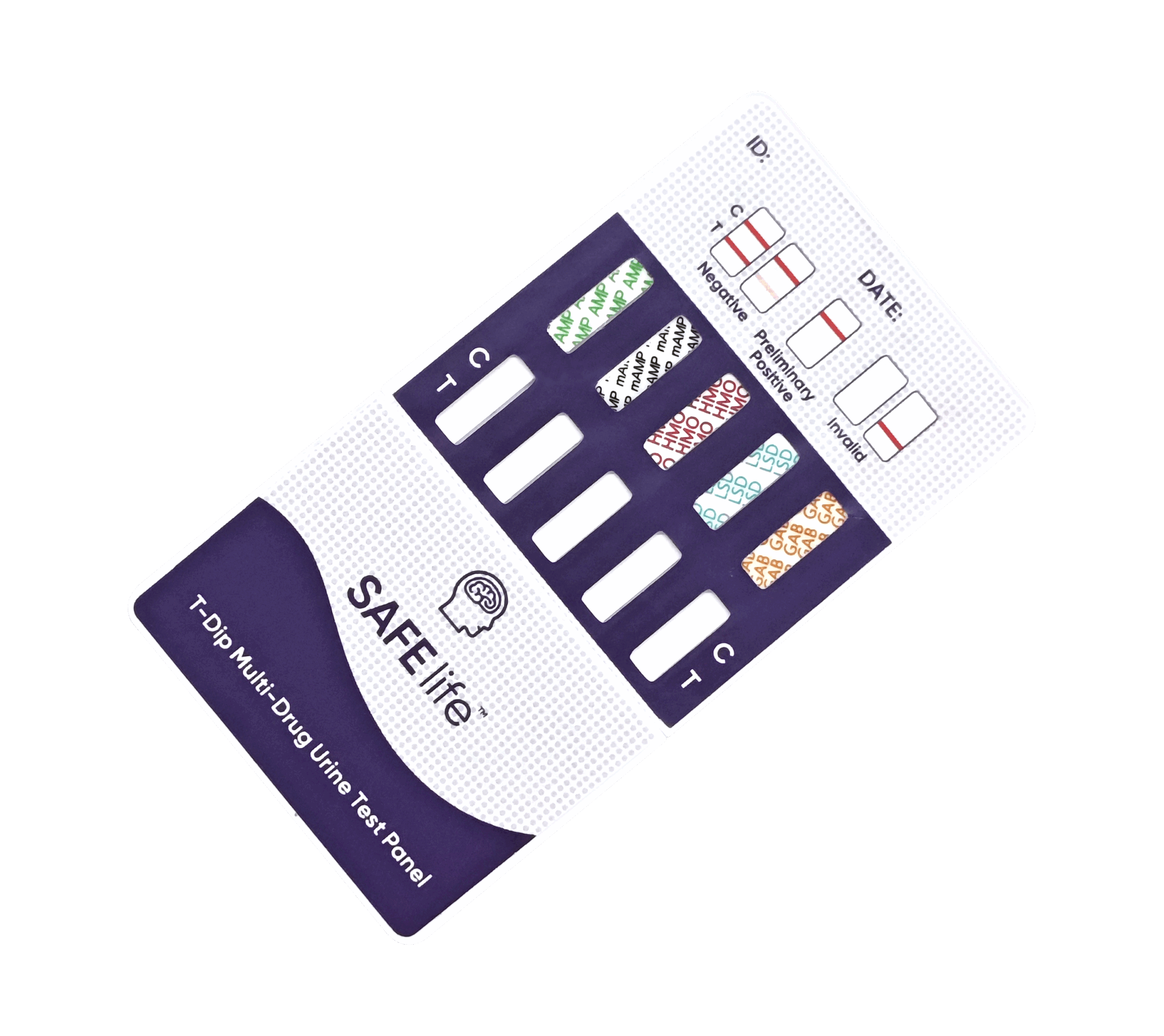
SAFElife 12-Panel Urine Drug Test Dip Cards (WDOA-6125; CLIA-Waived)
starting at $87.50 per box ($3.50 per test; 25 tests per box) -
CONSTRUCTION 12-Panel Urine Drug Test Dip Cards (DOA-1124; Forensic Use Only)
$125.00 per box ($5.00 per test; 25 tests per box)
12 Panel Drug Test Dip Cards
Expanded Urine Drug Screening for Forensic and Compliance Testing Programs
12 panel drug test dip cards provide a practical way to screen for multiple drug classes from a urine specimen using a simple dip-and-read testing format. These tests are designed for programs that require broader screening than smaller panel tests while still needing a compact, cost-effective, and easy-to-store testing option.
Our 12 panel drug test dip cards are available in different configurations that may screen for substances such as Amphetamines, Barbiturates, Benzodiazepines, Buprenorphine, Cocaine, Ecstasy, Marijuana, Methadone, Methamphetamine, Opiates, Oxycodone, PCP, and Propoxyphene.
Because 12 panel dip card configurations may vary, it is important to review the specific product description before ordering to confirm which substances are included on the device.
What Is a 12 Panel Drug Test Dip Card?
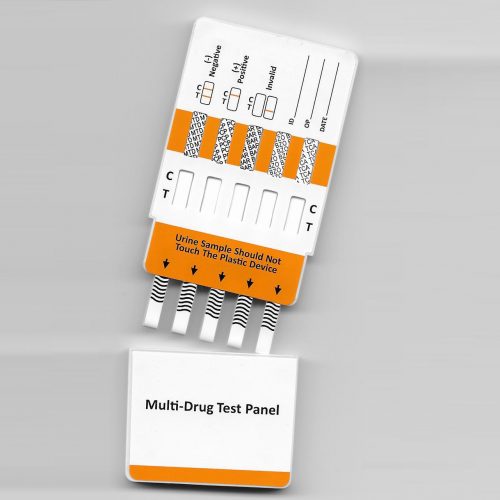
A 12 panel drug test dip card is a rapid urine screening device that checks one urine specimen for multiple drugs or drug metabolites at the same time. The test is dipped into a urine sample, removed, placed on a flat surface, and read after the test has developed.
Unlike a drug test cup, a dip card requires a separate urine collection container. This makes dip cards easier to store, transport, and distribute in testing programs where space, cost, and simplicity are important.
Most 12 panel urine drug test dip cards provide preliminary results within approximately 5 minutes.
What Can 12 Panel Drug Test Dip Cards Screen For?
Different variations of our 12 panel drug test dip cards may include combinations of the following drug classes:
-
Amphetamines (AMP)
-
Barbiturates (BAR)
-
Benzodiazepines (BZO)
-
Buprenorphine (BUP)
-
Cocaine (COC)
-
Ecstasy / MDMA
-
Marijuana / THC
-
Methadone (MTD)
-
Methamphetamine (mAMP / MET)
-
Opiates (OPI)
-
Oxycodone (OXY)
-
PCP
-
Propoxyphene (PPX)
Not every 12 panel configuration will contain the same combination of substances. Always verify the product specifications for the exact test panel.
Drug Categories Included in 12 Panel Dip Card Testing
Stimulant Screening
Many 12 panel dip cards include screening for Amphetamines, Methamphetamine, Cocaine, and MDMA / Ecstasy. These substances are commonly included in expanded urine drug screening because they represent several different stimulant categories.
Opioid and Opiate Screening
Expanded 12 panel configurations may include Opiates, Oxycodone, Methadone, Buprenorphine, and Propoxyphene. These panels provide broader opioid-related coverage than a basic opiate screen alone.
Because certain synthetic or semi-synthetic opioids may not be reliably detected by a standard OPI panel, dedicated strips such as OXY, MTD, BUP, or PPX may be included depending on the test configuration.
Sedative and Prescription Medication Screening
Benzodiazepines and Barbiturates are commonly included in expanded urine drug testing panels. These prescription medication categories may be monitored in forensic, correctional, court-related, or compliance-based testing environments.
Marijuana and PCP Screening
Marijuana / THC and PCP are also commonly included in 12 panel drug test dip card configurations. These panels help provide broader coverage across both commonly tested and less commonly encountered substances.
Why Choose a 12 Panel Drug Test Dip Card?
A 12 panel drug test dip card is useful when a program needs wider drug detection coverage but does not require an all-in-one cup format. The dip card design keeps testing simple while allowing for expanded screening across multiple drug categories.
Key advantages include:
-
Screens for multiple drug classes in one device
-
Compact and easy to store
-
Simple dip-and-read format
-
Fast preliminary results
-
No analyzer or electronic reader required
-
Useful for high-volume testing environments
-
Cost-effective compared to larger testing formats
-
Multiple configurations available
For programs that need broad drug screening in a compact format, 12 panel dip cards provide an efficient testing option.
12 Panel Dip Cards vs. Drug Test Cups
12 panel dip cards and 12 panel drug test cups are both used for urine drug screening, but the testing format is different.
| Test Format | Description |
|---|---|
| 12 Panel Dip Card | Requires a separate collection container and is dipped into the urine specimen |
| 12 Panel Drug Test Cup | Combines specimen collection and testing in one self-contained cup |
| Single Panel Dip Card | Screens for one specific substance |
| Expanded Panel Cup | May include broader testing and built-in specimen validation options |
Dip cards are often preferred when compact storage, lower cost, and simple administration are priorities. Drug test cups may be preferred when an all-in-one collection and testing device is required.
Law Enforcement and Court-Related Testing Applications
Certain 12 panel drug test dip cards may be used in forensic or compliance-related testing environments where rapid preliminary screening is needed.
Law-enforcement-related and court-connected programs may use expanded dip card testing for:
-
Probation monitoring
-
Parole compliance testing
-
Court-ordered screening
-
Drug court accountability programs
-
Correctional facility screening
-
Diversion program monitoring
-
Law enforcement-related compliance checks
Testing requirements can vary by program, jurisdiction, and product classification. Always confirm that the selected device is appropriate for the intended testing environment.
How to Use a 12 Panel Drug Test Dip Card
Step 1: Collect the Urine Specimen
Collect the urine sample in a clean specimen container.
Step 2: Open the Test Device
Remove the 12 panel dip card from its sealed pouch immediately before use.
Step 3: Dip the Test Card
Dip the absorbent end of the test card into the urine specimen according to the manufacturer’s instructions. Do not dip past the maximum line if one is indicated.
Step 4: Place on a Flat Surface
Remove the test card from the specimen and place it on a clean, level surface.
Step 5: Read the Results
Read results within the timeframe stated in the product instructions. Most rapid urine drug test dip cards provide preliminary results within approximately 5 minutes.
How to Read 12 Panel Drug Test Dip Card Results
Negative Result
Two lines appear: one control line and one test line. This means the substance was not detected above the test cutoff level.
Preliminary Positive Result
Only the control line appears. No test line appears for the substance being screened. This indicates a preliminary positive result.
Invalid Result
No control line appears. The test should be considered invalid and repeated with a new device.
A faint test line is generally interpreted as negative as long as the control line is present and the result is read within the proper timeframe.
All non-negative results should be confirmed through certified laboratory testing when required by policy, procedure, or legal standards.
Why 12 Panel Drug Testing Provides Broader Coverage
A 12 panel drug test dip card helps reduce the need for multiple individual tests by screening for several substance categories at once. This can be especially valuable in programs that require broader preliminary screening across stimulants, opioids, sedatives, cannabis, and other controlled substances.
Instead of using several separate dip cards, a 12 panel configuration consolidates multiple test strips into one device, helping improve efficiency while maintaining a straightforward testing process.
Configuration Notice
12 panel drug test dip cards may differ by manufacturer, model, and intended use. Some versions may include Propoxyphene, while others may substitute a different analyte. Always confirm the listed test strips on the product page before purchasing or administering the test.
Forensic Use Only Notice
Certain products may be labeled “Forensic Use Only” (FUO). These products are intended for professional forensic, institutional, law-enforcement-related, and compliance testing applications and are not intended to diagnose medical conditions or guide treatment decisions.
Frequently Asked Questions
What does a 12 panel drug test dip card test for?
Different variations of our 12 panel drug test dip cards may screen for Amphetamines, Barbiturates, Benzodiazepines, Buprenorphine, Cocaine, Ecstasy, Marijuana, Methadone, Methamphetamine, Opiates, Oxycodone, PCP, and Propoxyphene.
Are all 12 panel dip cards the same?
No. 12 panel configurations can vary. Always review the product listing to confirm the exact substances included on the device.
Does a 12 panel dip card detect marijuana?
Many 12 panel drug test dip cards include Marijuana / THC screening, but you should always confirm the product configuration before use.
Does a 12 panel drug test detect buprenorphine?
Some 12 panel configurations include Buprenorphine (BUP). This panel is separate from standard opiate testing.
Why are opiates and oxycodone listed separately?
Opiates and oxycodone are different testing categories. Oxycodone may not always be reliably detected by a standard opiate panel, so many expanded tests include a dedicated OXY strip.
Does a 12 panel dip card detect methadone?
Some 12 panel configurations include Methadone (MTD) testing. Always confirm the listed analytes for the specific test.
Does this test detect fentanyl?
Not unless fentanyl is specifically listed as one of the panels. A dedicated fentanyl test or expanded panel would be needed for fentanyl screening.
How fast are results available?
Most 12 panel urine drug test dip cards provide preliminary results within approximately 5 minutes.
What does a faint test line mean?
A faint test line is generally considered negative as long as the control line is present and the result is read within the proper timeframe.
Are preliminary positive results final?
No. Dip cards provide preliminary screening results. Any non-negative result should be confirmed through certified laboratory testing when required.