
-
Overstock Sale: Amazewell 12-Panel Test Cup w/ ETG, FYL, & Adulterants (ASUD-9125; Forensic Use Only)
Original price was: $93.75.$76.25Current price is: $76.25. per box ($3.05 per test; 25 tests per box) -
Featured Sale: 1-Step 12-Panel Instant Drug Test Cups (DOA1127CW; CLIA-Waived)
starting at Original price was: $62.50.$55.00Current price is: $55.00. per box ($2.20 per test; 25 tests per box) -
1-Step 12-Panel Instant Drug Test Cups w/ FYL (DOA1127CW w/ FYL; CLIA-Waived)
starting at $87.50 per box ($3.50 per test; 25 tests per box) -
SAFElife 12-Panel Drug Test C-Cups (CDOA-6125; CLIA-Waived)
$62.50 per box ($2.50 per test; 25 tests per box) -
SAFElife 12-Panel Drug Test C-Cups w/ Adulterants (CDOA-6125-A3; CLIA-Waived)
$68.75 per box ($2.75 per test; 25 tests per box) -
SAFElife 12-Panel Drug Test C-Cups w/ ETG & FYL (CDOA-9125-A3; Forensic Use Only)
$96.25 per box ($3.85 per test; 25 tests per box) -
SAFElife 12-Panel Drug Test T-Cups (TDOA-6125; CLIA-Waived)
$100.00 per box ($4.00 per test; 25 tests per box) -
Healgen 12-Panel Drug Test Cups (HCDOAV-6125; CLIA-Waived)
$81.25 per box ($3.25 per test; 25 tests per box)
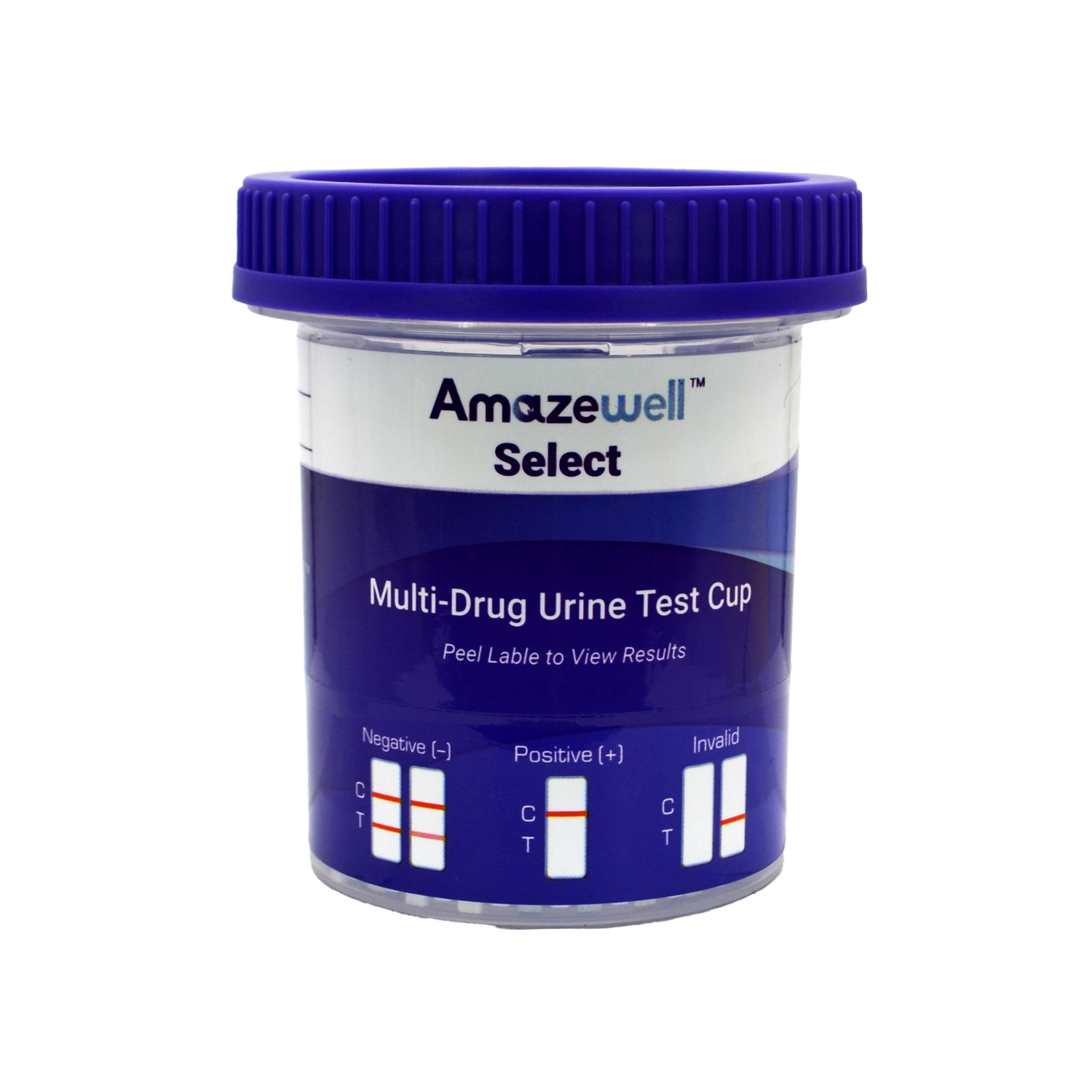
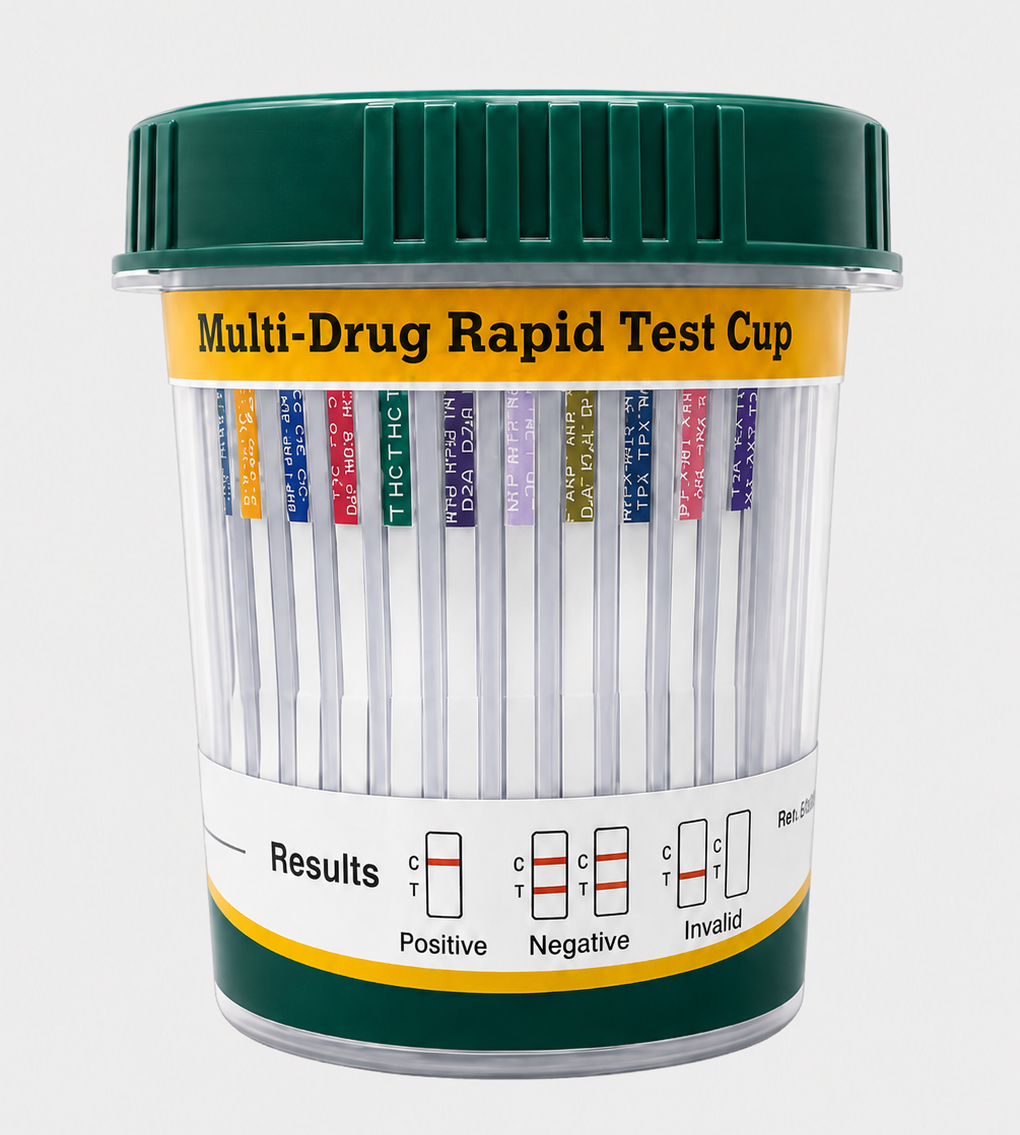


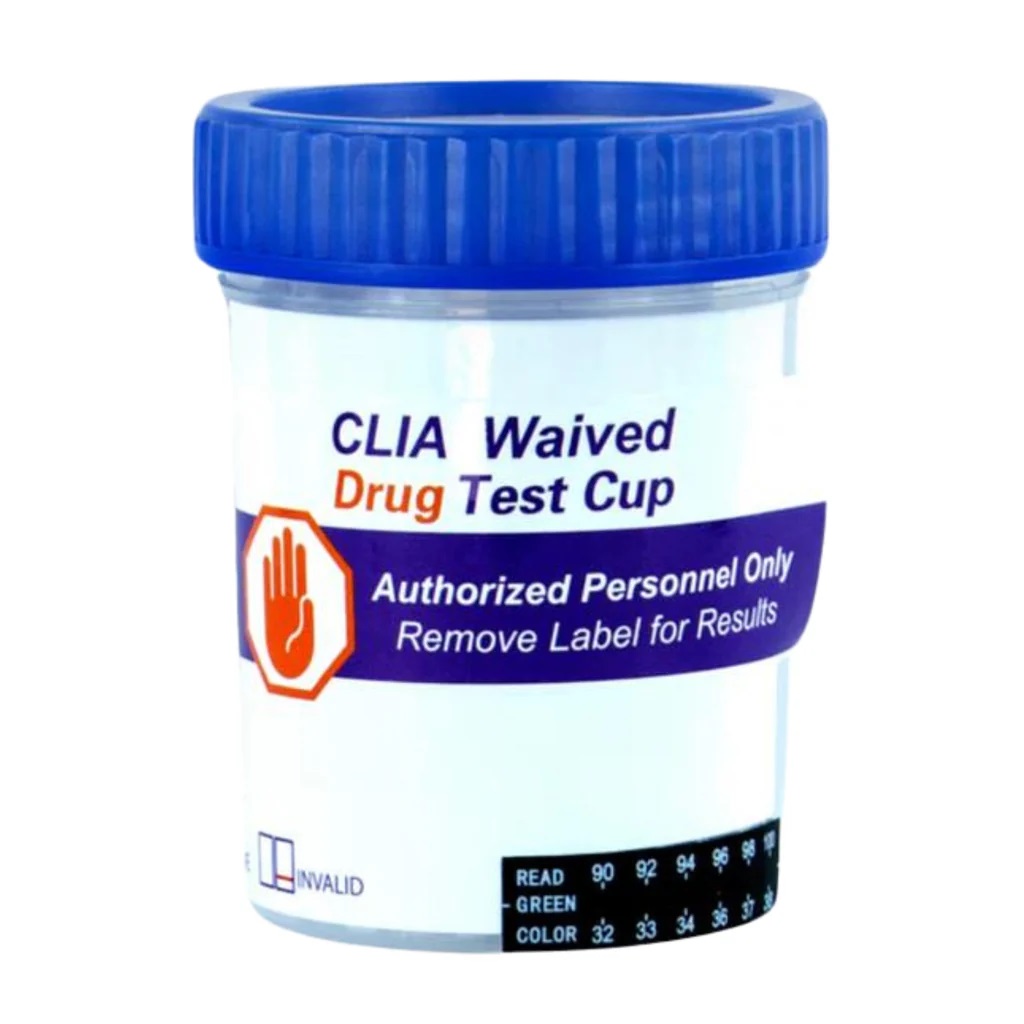
12 Panel Drug Test Cups
A 12 panel drug test cup provides comprehensive urine drug screening in a convenient all-in-one collection device. Designed to detect a broad range of illicit drugs, prescription medications, opioids, stimulants, sedatives, and other controlled substances, 12 panel cups have become one of the most widely used drug testing solutions across the United States.
By combining specimen collection and testing into a single self-contained cup, these devices help simplify the testing process while delivering rapid preliminary results. Their expanded detection capabilities make them particularly valuable for organizations that require broader substance screening than traditional 5 panel or 10 panel drug tests.
Whether used for workplace testing, rehabilitation monitoring, probation compliance, or health screenings, there are 12 panel drug test cup options for everyone.
What Is a 12 Panel Drug Test Cup?
A 12 panel drug test cup is a rapid immunoassay screening device designed to detect twelve different drug classes or drug metabolites from a urine specimen. Unlike laboratory testing, which can require days for results, 12 panel cups provide fast preliminary screening results directly at the collection site.
The integrated design combines:
- Specimen collection
- Drug screening
- Temperature verification
- Result interpretation
into one easy-to-use device.
This streamlined process reduces specimen handling and improves collection efficiency.
What Drugs Does a 12 Panel Drug Test Cup Detect?
A traditional 12 panel drug test cup commonly screens for:
- Amphetamines (AMP)
- Barbiturates (BAR)
- Benzodiazepines (BZO)
- Buprenorphine (BUP)
- Cocaine (COC)
- MDMA / Ecstasy (MDMA)
- Marijuana / THC (THC)
- Methadone (MTD)
- Methamphetamine (MET)
- Opiates (OPI)
- Oxycodone (OXY)
- Phencyclidine (PCP)
These substances represent some of the most frequently abused illicit drugs and prescription medications encountered in workplace, clinical, and forensic drug testing programs.
Expanded 12 Panel Drug Test Cup Variants
Not all 12 panel drug test cups are identical. Many modern configurations include additional analytes to address evolving drug trends and changing testing requirements.
Expanded versions may include:
Fentanyl (FEN)
Fentanyl is a powerful synthetic opioid that has become a major focus of drug testing programs nationwide. Because fentanyl is not reliably detected by traditional opiate screens, many organizations specifically request cups that include dedicated fentanyl testing.
Fentanyl screening is increasingly common in:
- Drug courts
- Probation programs
- Rehabilitation facilities
- Healthcare settings
- Workplace safety programs
EtG Alcohol Testing (ETG)
EtG (Ethyl Glucuronide) is a direct metabolite of alcohol that remains detectable longer than alcohol itself.
Adding EtG screening allows organizations to monitor:
- Alcohol abstinence
- Court-ordered sobriety programs
- Workplace alcohol policies
- And more
Many organizations prefer a 12 panel cup with EtG because it combines alcohol and drug screening into one convenient test.
Why Organizations Choose 12 Panel Drug Test Cups
The 12 panel configuration has become one of the most popular testing formats because it offers broader detection coverage than basic workplace panels without significantly increasing testing complexity.
Benefits include:
Comprehensive Drug Detection
Screens for multiple categories of substances including:
- Opioids
- Prescription pain medications
- Benzodiazepines
- Stimulants
- Cannabis
- Club drugs
- MAT medications
Fast Results
Most professional-grade 12 panel cups provide preliminary results within approximately 5 minutes.
Convenient Collection
The all-in-one design eliminates the need for multiple collection containers or testing devices.
Reduced Specimen Handling
Collection and testing occur in the same device, helping improve workflow efficiency.
Cost-Effective Screening
Provides broad substance detection while remaining affordable for high-volume testing programs.
The Importance of Buprenorphine Testing
One of the most valuable additions to modern 12 panel drug test cups is dedicated buprenorphine screening.
As medication-assisted treatment (MAT) programs continue to expand, organizations increasingly require visibility into buprenorphine use for both treatment monitoring and compliance purposes.
Buprenorphine testing is commonly utilized by:
- Drug courts
- Probation departments
- Rehabilitation centers
- Sober living homes
- Pain management clinics
- Treatment providers
Because buprenorphine may not be detected through standard opiate screening alone, dedicated testing significantly improves monitoring capabilities.
Understanding Prescription Drug Monitoring
Modern drug testing programs increasingly focus on prescription medication misuse in addition to traditional illicit substances.
A 12 panel drug test cup commonly includes dedicated screening for:
Benzodiazepines
Used to detect medications commonly prescribed for anxiety, insomnia, and seizure disorders.
Oxycodone
Provides separate detection for one of the most commonly prescribed opioid pain medications.
Methadone
Allows for monitoring of methadone maintenance and pain management therapies.
Buprenorphine
Supports medication-assisted treatment compliance and monitoring.
These expanded prescription drug categories help organizations address modern substance abuse challenges more effectively.
Built-In Temperature Verification
Most professional drug test cups include an integrated temperature strip that helps verify specimen authenticity immediately following collection.
The temperature indicator helps determine whether the specimen falls within an expected range shortly after collection, providing an additional layer of confidence in the testing process.
How to Use a 12 Panel Drug Test Cup
Step 1: Collect the Specimen
Open the sealed cup and collect the urine sample directly into the collection container.
Step 2: Secure the Lid
Close the cup tightly using the leak-resistant lid.
Step 3: Verify Temperature
Check the temperature strip shortly after collection.
Step 4: Allow Testing to Develop
Place the cup on a flat surface while the test strips process.
Step 5: Read Results
Interpret results according to the manufacturer's instructions.
Reading 12 Panel Drug Test Cup Results
Negative Result
Two lines appear for the drug being tested:
- Control line visible
- Test line visible
A faint test line is generally considered negative.
Preliminary Positive Result
Only the control line appears.
No test line is visible for the substance being screened.
Invalid Result
No control line appears.
The test should be repeated using a new device.
All non-negative results should be confirmed through certified laboratory testing such as GC/MS or LC-MS/MS.
Common Uses for 12 Panel Drug Test Cups
| Setting | Common Applications |
|---|---|
| Workplace Testing | Pre-employment, random, post-accident, return-to-duty testing |
| Drug Courts | Compliance monitoring |
| Probation & Parole | Accountability testing |
| Rehabilitation Centers | Recovery and relapse monitoring |
| Sober Living Homes | Resident screening |
| Healthcare Facilities | Clinical toxicology testing |
| Pain Management Clinics | Prescription monitoring |
| Correctional Facilities | Intake and ongoing screening |
| Personal Testing | At-home drug screening |
Why 12 Panel Drug Test Cups Remain an Industry Standard
The 12 panel drug test cup offers an ideal balance of convenience, affordability, and expanded substance detection. By screening for both traditional drugs of abuse and commonly misused prescription medications, these cups provide organizations with a broader view of potential substance use while maintaining the simplicity of rapid onsite testing.
As workplace safety initiatives, treatment programs, and compliance monitoring requirements continue to evolve, 12 panel drug test cups remain one of the most trusted and effective drug screening tools available.
Forensic Use Only Notice
Certain products may be labeled “Forensic Use Only” (FUO). These products are intended for professional workplace, institutional, forensic, and compliance testing applications and are not intended to diagnose medical conditions or guide treatment decisions.
Frequently Asked Questions
What does a 12 panel drug test cup test for?
A standard 12 panel drug test cup commonly screens for amphetamines, barbiturates, benzodiazepines, buprenorphine, cocaine, marijuana, methadone, methamphetamine, MDMA, opiates, oxycodone, and PCP.
Does a 12 panel drug test detect fentanyl?
Some expanded 12 panel configurations include fentanyl testing. Always review the product specifications to confirm included analytes.
Can a 12 panel drug test detect alcohol?
Certain versions include EtG alcohol testing, allowing for alcohol metabolite detection alongside drug screening.
Why is buprenorphine tested separately?
Buprenorphine often requires a dedicated test strip because it may not reliably trigger standard opiate screening.
Does a 12 panel drug test detect prescription medications?
Yes. Many of the substances included in a 12 panel cup are prescription medications, including benzodiazepines, oxycodone, methadone, and buprenorphine.
How long does it take to get results?
Most 12 panel drug test cups provide preliminary results within approximately 5 minutes.
What does a faint line mean?
A faint test line is generally interpreted as a negative result when the control line is present and the test is read within the proper timeframe.
Are positive results final?
No. Drug test cups provide preliminary screening results. Any non-negative result should be confirmed through certified laboratory confirmation testing.
Who uses 12 panel drug test cups?
Employers, healthcare providers, rehabilitation centers, probation departments, correctional facilities, drug courts, sober living programs, and individuals performing personal drug screening commonly utilize 12 panel drug test cups.