
-
1-Step 14-Panel Instant Drug Test Cups w/ ETG, FYL, & Adulterants (DUA-1147-A3; Forensic Use Only)
starting at $112.50 per box ($4.50 per test; 25 tests per box) -
1-Step 14-Panel Instant Drug Test Cups w/ ETG, FYL, K2 (DOA-1147-A3; Forensic Use Only)
starting at $112.50 per box ($4.50 per test; 25 tests per box) -
1-Step 14-Panel Instant Drug Test Cups w/ ETG, FYL, KRA, K2 (DOA-1147-A3 w/ KRA; Forensic Use Only)
starting at $112.50 per box ($4.50 per test; 25 tests per box) -
1-Step 14-Panel Instant Drug Test Cups w/ FYL & Adulterants (DUA1147CW w/ FYL; CLIA-Waived)
starting at $100.00 per box ($4.00 per test; 25 tests per box) -
SAFElife 14-Panel Drug Test C-Cups W/ FYL (CDOA-L11145; CLIA-Waived)
$100.00 per box ($4.00 per test; 25 tests per box)
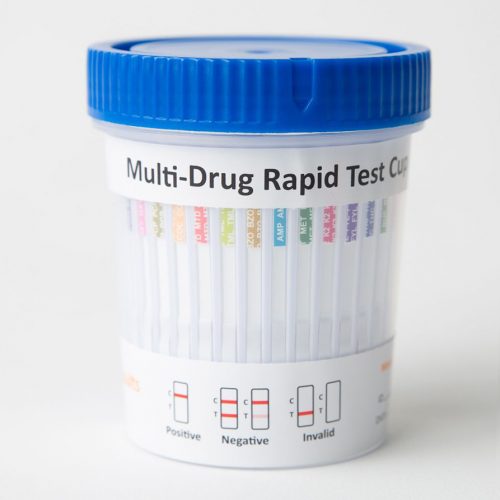
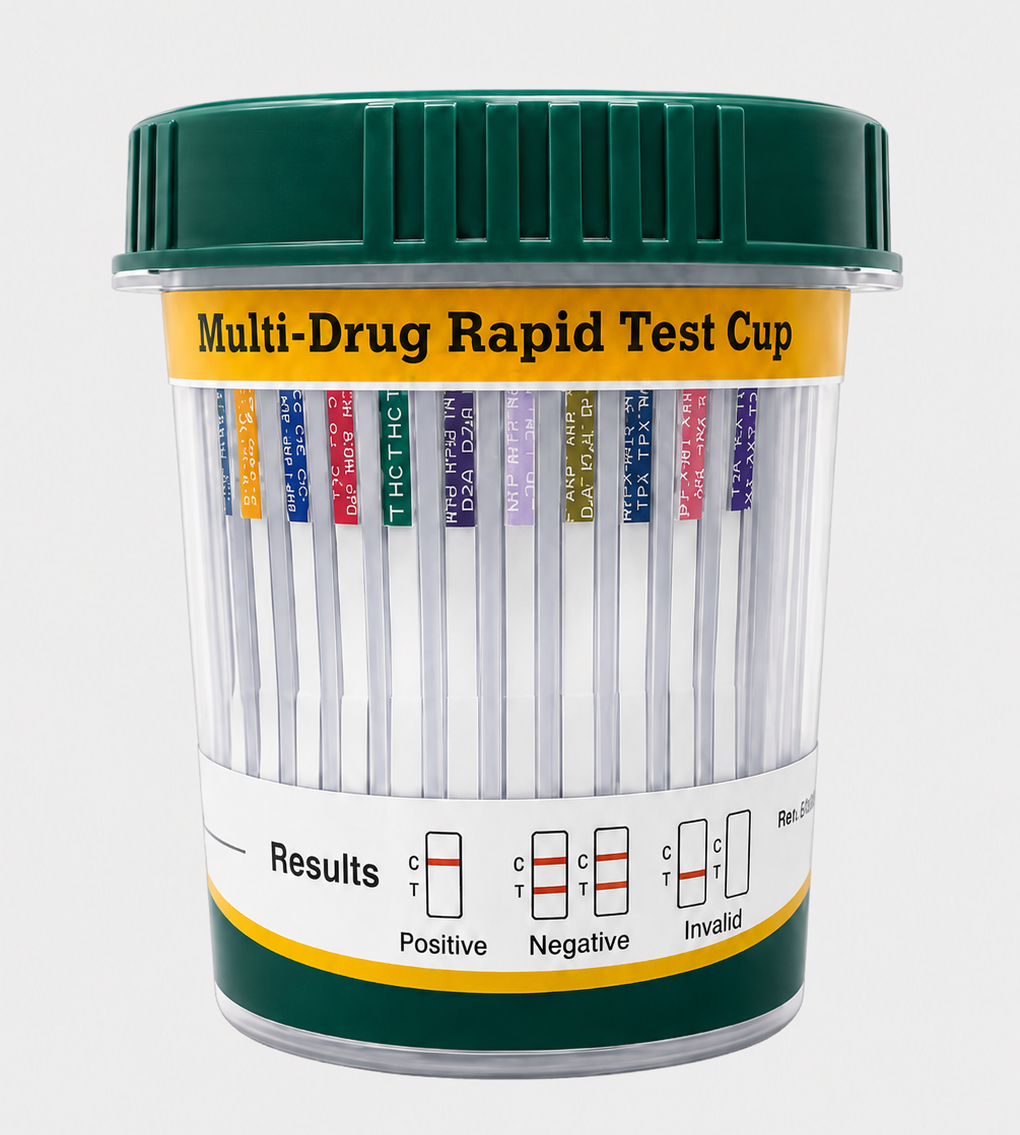

14 Panel Drug Test Cups
A 14 panel drug test cup provides comprehensive urine drug screening in a convenient all-in-one collection device. Designed to detect a broad range of illicit drugs, prescription medications, opioids, stimulants, sedatives, and emerging substances, 14 panel drug test cups offer expanded screening capabilities beyond traditional workplace drug tests.
As drug testing programs continue to evolve, many organizations require screening for substances that are not included in standard panels. Modern 14 panel drug test cups may include testing for substances such as fentanyl, kratom, synthetic cannabinoids (K2/Spice), tramadol, alcohol metabolites, and specimen adulteration markers in addition to traditional drugs of abuse.
Because of their versatility and expanded detection capabilities, 14 panel cups are commonly used.
What Is a 14 Panel Drug Test Cup?
A 14 panel drug test cup is a rapid immunoassay urine screening device designed to detect multiple drug classes and metabolites from a single urine specimen.
The self-contained design combines:
- Specimen collection
- Drug screening
- Temperature verification
- Result interpretation
into one convenient testing device.
This streamlined process reduces specimen handling, improves collection efficiency, and provides fast preliminary screening results without the need for laboratory equipment.
What Drugs Does a 14 Panel Drug Test Cup Detect?
Most 14 panel drug test cups include screening for traditional drugs of abuse and commonly misused prescription medications, including:
- Amphetamines (AMP)
- Barbiturates (BAR)
- Benzodiazepines (BZO)
- Buprenorphine (BUP)
- Cocaine (COC)
- Marijuana / THC (THC)
- Methamphetamine (MET)
- Methadone (MTD)
- MDMA / Ecstasy (MDMA)
- Opiates / Morphine (OPI)
- Oxycodone (OXY)
- PCP (PCP)
- Tricyclic Antidepressants (TCA)
In addition to these commonly screened substances, many 14 panel configurations include expanded analytes designed to address modern substance abuse trends.
Expanded Detection Beyond Traditional Drug Panels
One of the biggest advantages of a 14 panel drug test cup is its ability to include newer and emerging substances that are often excluded from smaller testing panels.
Depending on the configuration selected, a 14 panel cup may include detection for:
Fentanyl (FEN)
Fentanyl is a powerful synthetic opioid that has become a major focus of drug testing programs nationwide.
Because fentanyl is not reliably detected through traditional opiate screening, dedicated fentanyl testing has become increasingly important for:
- Drug courts
- Rehabilitation programs
- Probation monitoring
- Workplace safety programs
- Healthcare facilities
Expanded fentanyl testing helps organizations address one of the most significant public health concerns in modern toxicology.
Kratom (KRA)
Kratom products have grown in popularity throughout the United States and are increasingly being monitored.
Kratom screening may be included in certain 14 panel configurations to provide visibility into the use of mitragynine-containing products.
K2 / Synthetic Cannabinoids
Synthetic cannabinoids, often referred to as K2 or Spice, are laboratory-produced substances designed to mimic the effects of marijuana.
Unlike traditional THC testing, synthetic cannabinoid screening targets compounds that may not be detected through standard marijuana tests.
Because of their unpredictable effects and abuse potential, K2 testing is increasingly included in expanded drug screening programs.
Tramadol (TRA)
Tramadol is a prescription pain medication that is not always identified through traditional opioid screening.
EtG Alcohol Testing (ETG)
Many expanded 14 panel drug test cups include Ethyl Glucuronide (EtG), a direct metabolite of alcohol.
Unlike breath alcohol testing, EtG can help identify recent alcohol consumption over a longer period of time.
Combining alcohol and drug screening into one test helps improve efficiency while expanding monitoring capabilities.
Adulteration Testing for Specimen Validity
Some 14 panel drug test cups include an integrated adulteration panel designed to help identify attempts to tamper with or alter a urine specimen.
Common adulteration markers may include:
- Creatinine
- Specific Gravity
- pH
- Nitrite
- Oxidants
- Glutaraldehyde
Specimen validity testing provides an additional layer of confidence by helping identify diluted, substituted, or chemically altered samples.
This feature is particularly valuable in:
- Workplace drug testing
- Probation monitoring
- Drug courts
- Rehabilitation facilities
- Correctional institutions
Why Organizations Choose 14 Panel Drug Test Cups
The 14 panel configuration has become increasingly popular because it offers broader screening coverage than standard workplace panels while maintaining the convenience of rapid onsite testing.
Benefits include:
Expanded Substance Detection
Screens for traditional drugs, prescription medications, emerging substances, and alcohol biomarkers.
Fast Results
Most professional 14 panel cups provide preliminary results within approximately 5 minutes.
Convenient Collection
Collection and testing occur within a single self-contained device.
Reduced Specimen Handling
The integrated design minimizes transfer steps and simplifies administration.
Built-In Temperature Verification
Most professional 14 panel drug test cups include a temperature strip that helps verify specimen authenticity immediately following collection.
This additional feature helps improve confidence in the collection process.
How to Use a 14 Panel Drug Test Cup
Step 1: Collect the Specimen
Collect the urine sample directly into the collection cup.
Step 2: Secure the Lid
Tightly seal the leak-resistant lid.
Step 3: Verify Temperature
Check the integrated temperature strip shortly after collection.
Step 4: Allow the Test to Develop
Place the cup on a flat surface while the test strips process.
Step 5: Read Results
Interpret results according to the manufacturer's instructions.
Reading 14 Panel Drug Test Cup Results
Negative Result
Two lines appear:
- Control line visible
- Test line visible
A faint test line is generally interpreted as negative.
Preliminary Positive Result
Only the control line appears.
No test line appears for the substance being screened.
Invalid Result
No control line appears.
The test should be repeated using a new device.
All non-negative results should be confirmed through certified laboratory testing methods such as GC/MS or LC-MS/MS.
Why 14 Panel Drug Test Cups Continue to Grow in Popularity
As substance abuse patterns continue to evolve, many organizations require testing that extends beyond traditional workplace drugs. The inclusion of substances such as fentanyl, kratom, K2, tramadol, EtG alcohol, and adulteration testing helps provide a more complete picture of substance use and specimen validity.
For organizations seeking expanded detection capabilities while maintaining the convenience of rapid onsite screening, the 14 panel drug test cup offers one of the most comprehensive testing solutions available.
Forensic Use Only Notice
Certain products may be labeled “Forensic Use Only” (FUO). These products are intended for professional workplace, institutional, forensic, and compliance testing applications and are not intended to diagnose medical conditions or guide treatment decisions.
Frequently Asked Questions
What does a 14 panel drug test cup test for?
A typical 14 panel drug test cup screens for amphetamines, barbiturates, benzodiazepines, buprenorphine, cocaine, marijuana, methadone, methamphetamine, MDMA, opiates, oxycodone, PCP, tricyclic antidepressants, and additional analytes depending on the configuration.
Does a 14 panel drug test detect fentanyl?
Many expanded 14 panel configurations include dedicated fentanyl screening. Always review the product specifications to confirm included analytes.
Can a 14 panel drug test detect alcohol?
Certain versions include EtG alcohol testing, allowing for alcohol metabolite detection alongside drug screening.
What is the benefit of K2 testing?
K2 testing helps identify synthetic cannabinoids that may not be detected by traditional THC screening.
Why is kratom included in some 14 panel tests?
Kratom use has increased significantly in recent years, leading many organizations to add dedicated kratom screening to their testing programs.
What is adulteration testing?
Adulteration testing evaluates specimen validity by measuring markers such as creatinine, pH, specific gravity, nitrite, oxidants, and other indicators of sample tampering.
What is the difference between a 13 panel and a 14 panel drug test?
Many 14 panel configurations add specialized analytes such as fentanyl, kratom, tramadol, K2, EtG alcohol, or specimen validity testing beyond what is commonly included in a 13 panel cup.
How long does it take to get results?
Most 14 panel drug test cups provide preliminary results within approximately 5 minutes.
Are positive results final?
No. Drug test cups provide preliminary screening results. Any non-negative result should be confirmed through certified laboratory testing.