
-
1-Step 17-Panel Instant Drug Test Cups w/ Adulterants (DUA-1177-A3; Forensic Use Only)
starting at $143.75 per box ($5.75 per test; 25 tests per box)
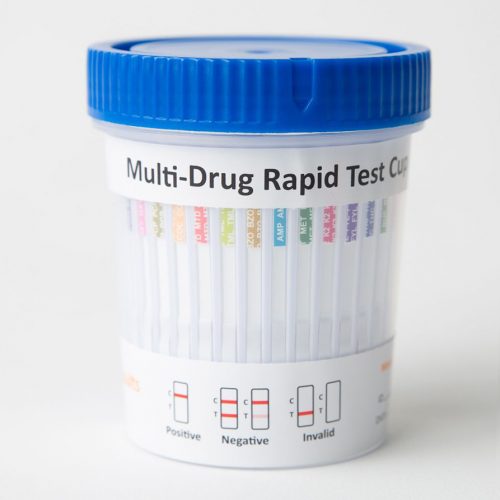
17 Panel Drug Test Cups
A 17 panel drug test cup is one of the most comprehensive rapid urine drug screening solutions available, offering expanded detection for traditional drugs of abuse, prescription medications, synthetic substances, alcohol metabolites, and specimen validity markers in a single self-contained testing device.
As drug use patterns continue to evolve, many organizations require testing solutions that go beyond standard workplace drug panels. Modern 17 panel drug test cups help fill that need by providing broader visibility into emerging substances such as fentanyl, kratom, tramadol, synthetic cannabinoids, heroin metabolites, and alcohol use while maintaining the convenience of rapid onsite screening.
What Is a 17 Panel Drug Test Cup?
A 17 panel drug test cup is a rapid immunoassay urine screening device designed to detect a wide range of drugs and metabolites from a single urine specimen.
The all-in-one design combines:
-
Specimen collection
-
Multi-drug screening
-
Temperature verification
-
Adulteration detection
-
Result interpretation
into one easy-to-use testing solution.
This integrated design reduces specimen handling, minimizes contamination risks, and provides preliminary results within minutes.
What Drugs Can a 17 Panel Drug Test Cup Detect?
Depending on the configuration selected, a 17 panel drug test cup may include screening for:
Traditional Drugs of Abuse
-
Marijuana / THC (THC)
-
Cocaine (COC)
-
Amphetamines (AMP)
-
Methamphetamine (MET)
-
Opiates (OPI)
-
PCP (PCP)
-
MDMA / Ecstasy (MDMA)
Prescription Medication Monitoring
-
Benzodiazepines (BZO)
-
Barbiturates (BAR)
-
Buprenorphine (BUP)
-
Methadone (MTD)
-
Oxycodone (OXY)
-
Tricyclic Antidepressants (TCA)
Expanded Drug Detection
Many 17 panel cups also include:
-
Fentanyl (FEN)
-
Heroin Metabolite (6-MAM)
-
Tramadol (TRA)
-
Kratom (KRA)
-
K2 / Synthetic Cannabinoids (K2)
-
EtG Alcohol (ETG)
Some configurations also include specimen validity testing through integrated adulteration panels.
Always review the specific product specifications to confirm the analytes included in your selected device.
Why 17 Panel Drug Test Cups Are Different
While smaller panel configurations focus primarily on traditional workplace drugs, a 17 panel drug test cup expands screening to include several substances that have become increasingly important in recent years.
This expanded approach helps identify:
-
Emerging synthetic drugs
-
Prescription medication misuse
-
Alcohol consumption
-
Synthetic opioid exposure
-
Specimen tampering attempts
For organizations requiring maximum visibility into substance use, the 17 panel configuration provides one of the broadest rapid screening solutions available.
Heroin Detection Through 6-MAM Testing
One unique feature found in many 17 panel drug test cups is dedicated 6-MAM testing.
6-Monoacetylmorphine (6-MAM) is a unique metabolite produced specifically from heroin use. Unlike traditional opiate testing, which may detect multiple opioid compounds, 6-MAM testing helps specifically identify heroin exposure.
The inclusion of 6-MAM provides an additional level of precision that is not available on many smaller panel configurations.
Fentanyl Detection for Modern Drug Screening
Fentanyl continues to play a major role in overdose deaths throughout the United States, making dedicated fentanyl screening one of the most requested additions to modern drug testing programs.
Traditional opiate screening may not reliably detect fentanyl. Dedicated fentanyl testing helps provide visibility into synthetic opioid exposure and supports more comprehensive monitoring.
Kratom Screening
Kratom products have become increasingly common throughout the United States, leading many organizations to include dedicated kratom screening as part of their drug testing programs.
Because kratom is not included in standard workplace drug panels, expanded testing provides greater visibility into its use.
Tramadol Monitoring
Tramadol is a prescription pain medication that may not always be detected through traditional opioid screening methods.
Dedicated tramadol testing helps organizations monitor prescription medication use and improve compliance oversight.
EtG Alcohol Testing
Many 17 panel drug test cups include EtG (Ethyl Glucuronide) testing, allowing organizations to screen for recent alcohol consumption alongside drug testing.
EtG is a direct alcohol metabolite that remains detectable longer than alcohol itself, making it a valuable tool for abstinence monitoring.
Combining alcohol and drug screening into one device helps improve efficiency while reducing overall testing costs.
K2 and Synthetic Cannabinoid Detection
Synthetic cannabinoids are designed to mimic the effects of marijuana but often contain entirely different chemical compounds.
Because K2 and Spice products may not trigger traditional THC tests, dedicated synthetic cannabinoid screening provides an important layer of expanded detection.
Adulteration Testing and Specimen Validity
Some 17 panel drug test cups include an integrated adulteration panel designed to help identify attempts to tamper with a specimen.
Common specimen validity markers may include:
-
Creatinine
-
Specific Gravity
-
pH
-
Nitrite
-
Oxidants
-
Glutaraldehyde
Adulteration testing helps organizations identify:
-
Diluted samples
-
Chemically altered specimens
-
Substituted urine
-
Invalid collections
This additional layer of specimen validation is especially valuable in compliance-focused testing environments.
Why Organizations Choose 17 Panel Drug Test Cups
Organizations often select 17 panel drug test cups because they provide:
Expanded Detection Coverage
Broad screening for traditional drugs, prescription medications, synthetic substances, alcohol metabolites, and specimen validity markers.
Faster Decision Making
Rapid onsite results allow organizations to respond quickly to potential concerns.
Reduced Laboratory Costs
Comprehensive screening can often reduce unnecessary laboratory submissions.
Improved Visibility
Helps identify substances not commonly included in smaller panel configurations.
How to Use a 17 Panel Drug Test Cup
Step 1: Collect the Specimen
Collect the urine sample directly into the testing cup.
Step 2: Secure the Lid
Tightly close the leak-resistant lid.
Step 3: Verify Temperature
Review the temperature strip shortly after collection.
Step 4: Allow the Test to Process
Place the cup on a flat surface while the testing strips develop.
Step 5: Interpret Results
Read results according to the manufacturer's instructions.
Reading 17 Panel Drug Test Cup Results
Negative Result
A negative result displays:
-
A control line
-
A test line
Even a faint test line is generally considered negative.
Preliminary Positive Result
A preliminary positive result displays:
-
A control line
-
No test line for the substance being screened
Invalid Result
If the control line does not appear, the test should be considered invalid and repeated using a new device.
All non-negative results should be confirmed through certified laboratory testing methods such as GC/MS or LC-MS/MS.
Forensic Use Only Notice
Certain products may be labeled “Forensic Use Only” (FUO). These products are intended for professional workplace, institutional, forensic, and compliance testing applications and are not intended to diagnose medical conditions or guide treatment decisions.
Frequently Asked Questions
Why would someone choose a 17 panel drug test instead of a 10 panel test?
A 17 panel drug test provides significantly broader screening by adding substances such as fentanyl, kratom, tramadol, heroin metabolites, alcohol biomarkers, synthetic cannabinoids, and specimen validity testing.
Does a 17 panel drug test detect heroin specifically?
Many 17 panel configurations include 6-MAM testing, which is a unique metabolite associated specifically with heroin use.
Can a 17 panel drug test detect alcohol?
Yes. Certain configurations include EtG alcohol testing, which helps identify recent alcohol consumption.
What is the advantage of having an adulteration panel?
An adulteration panel helps identify diluted, substituted, or chemically altered urine samples, improving confidence in specimen validity.
Does a 17 panel drug test detect fentanyl?
Many expanded 17 panel cups include dedicated fentanyl screening. Always review product specifications to verify included analytes.
What substances are considered emerging drugs on a 17 panel test?
Depending on the configuration, emerging substances may include fentanyl, kratom, K2/synthetic cannabinoids, and heroin metabolites.
How long does it take to get results?
Most professional-grade 17 panel drug test cups provide preliminary results within approximately 5 minutes.
Are positive drug test cup results considered final?
No. Drug test cups provide preliminary screening results only. Any non-negative result should be confirmed through certified laboratory testing.