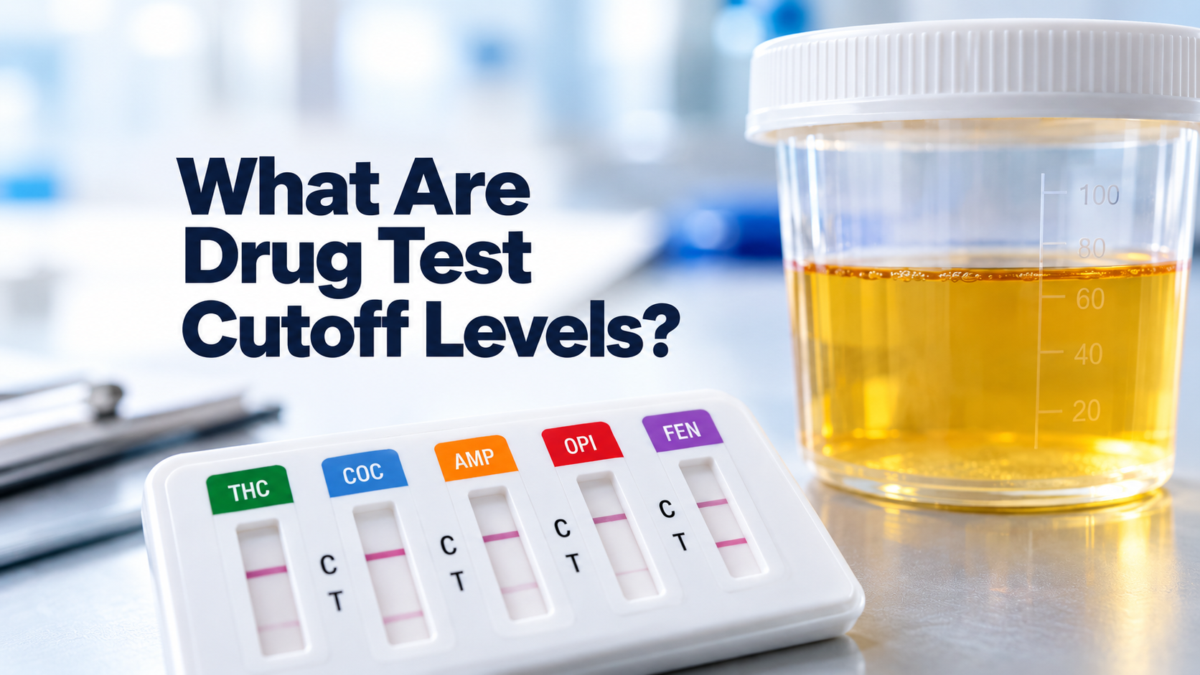
When shopping for an instant drug test, you may notice numbers listed next to each drug abbreviation.
You might see something like:
THC 50 ng/mL
COC 150 ng/mL
BUP 10 ng/mL
OXY 100 ng/mL
FEN 20 ng/mL
What do those numbers actually mean?
They are known as drug test cutoff levels, and understanding them is one of the most important parts of understanding how an instant drug test works.
A cutoff level is essentially the concentration used by a drug test to determine whether a specimen produces a negative or preliminary positive screening result.
It is not a measurement of impairment.
It does not tell you how much of a drug somebody consumed.
And it does not mean that absolutely no drug is present when the result is negative.
Instant drug tests are generally qualitative screening tests. Regulatory bodies describe these types of drug tests as tests that tell you whether a drug may be present rather than how much is present.
Understanding that distinction makes cutoff levels much easier to understand.
What Is a Drug Test Cutoff Level?
A cutoff level is a predetermined concentration used to interpret a drug-test result.
Imagine an instant urine drug test for THC with a cutoff of:
50 ng/mL
The assay has been designed to distinguish specimens around that established threshold.
Generally:
- A result below the assay’s cutoff produces a negative screening result.
- A result meeting the assay’s criteria at or above the cutoff can produce a preliminary or presumptive positive result.
That does not mean the instant test is measuring the exact amount in the specimen.
It is still essentially answering:
Negative or preliminary positive?
What Does ng/mL Mean?
Most urine drug-test cutoff levels are expressed as:
ng/mL
That stands for:
nanograms per milliliter
A nanogram is one-billionth of a gram.
So a THC cutoff of 50 ng/mL refers to a concentration of 50 nanograms of the target drug metabolite per milliliter of urine.
That sounds extraordinarily small—and it is.
Modern immunoassays and laboratory instruments are designed to detect extremely small concentrations of drugs and metabolites.
But there is an important point:
The numbers should not be compared directly between completely different drugs.
A fentanyl test with a very low cutoff does not mean fentanyl testing is somehow “better” than a THC test with a higher cutoff.
Different substances:
- occur at different concentrations in specimens,
- produce different metabolites,
- have different pharmacology,
- interact differently with immunoassays,
- and may require different analytical sensitivity.
That is why one drug might have a cutoff of 10 ng/mL while another has a cutoff of 1,000 ng/mL.
Why Do Drug Tests Need Cutoff Levels?
You might reasonably ask:
Why not make the test detect absolutely any trace amount of a drug?
Because drug testing is not simply about finding the smallest molecule technically detectable.
A useful screening test needs a defined threshold.
Cutoffs help standardize how the assay distinguishes between a negative screen and a specimen that should be considered preliminary positive.
They can also help prevent extremely small or clinically insignificant concentrations from automatically being interpreted the same way as more meaningful exposure.
Federal workplace drug-testing programs, for example, establish specific initial and confirmatory cutoff concentrations for each analyte rather than simply requiring laboratories to report any detectable trace. SAMHSA publishes these analytes and cutoffs as part of the federal testing program.
Drug Test Cutoffs Are Not a Measure of How Much Someone Used
Suppose someone tests preliminary positive for THC on a test with a 50 ng/mL cutoff.
Can you conclude that they consumed a particular amount of marijuana?
No.
Urine concentration is influenced by far too many variables.
These can include:
- How recently the substance was used
- Frequency of use
- Dose
- Individual metabolism
- Hydration
- Urine concentration
- The drug’s metabolism
- Which metabolite the assay detects
- Kidney function
- Time of specimen collection
- The cutoff used
Someone with a more concentrated urine specimen can have a different measured metabolite concentration than someone with very dilute urine even if their use histories were otherwise similar.
An instant drug test therefore cannot tell you:
“This person took exactly X amount of this drug.”
It also cannot tell you:
“This person’s line means they had 42 ng/mL.”
For an actual numerical concentration, laboratory quantitative testing is required.
Screening Cutoffs vs. Confirmation Cutoffs
Another source of confusion is that drug testing can involve more than one cutoff.
There may be an:
Initial screening cutoff
and a:
Confirmatory testing cutoff
These do not necessarily have to be the same number.
The initial test is generally used to quickly screen a specimen.
If the result meets the criteria for a preliminary positive, a more specific laboratory method may then be used for confirmation.
Federal workplace testing provides a good example.
Current federal urine testing uses an initial marijuana-metabolite cutoff of 50 ng/mL, while the confirmatory cutoff for the specific marijuana metabolite is lower at 15 ng/mL. Cocaine metabolite has an initial cutoff of 150 ng/mL and a confirmation cutoff of 100 ng/mL.
Why would the confirmation cutoff sometimes be lower?
Because confirmation testing uses much more specific analytical technology.
Laboratories commonly use technologies such as:
- Gas chromatography/mass spectrometry
- Liquid chromatography/mass spectrometry
These methods can identify specific compounds much more precisely than a rapid immunoassay screen.
The FDA emphasizes that rapid tests provide preliminary results and that additional laboratory testing is appropriate when definitive confirmation is required.
Why Does My Instant Drug Test Have Different Cutoffs?
Because commercial instant drug tests can be designed differently.
For example, an FDA-cleared multi-drug home test reviewed in an earlier FDA decision used:
- THC — 50 ng/mL
- Cocaine — 300 ng/mL
- Amphetamine — 1,000 ng/mL
- Methamphetamine — 1,000 ng/mL
- MDMA — 500 ng/mL
- Opiates — 2,000 ng/mL
- PCP — 25 ng/mL
That is a real example of a commercially cleared test whose cutoff combination differed from some current federal workplace values
This is why buyers need to look at the exact test configuration they are purchasing.
Two tests can both say:
12-Panel Drug Test
while using different:
- Drugs
- Metabolites
- Cutoff levels
- Manufacturers
- Regulatory classifications
Panel count does not tell you the cutoff.
Can Two THC Tests Have Different Cutoff Levels?
Yes.
This can happen with many analytes.
One THC test may use a commonly encountered 50 ng/mL cutoff.
Another test may be designed with a lower cutoff.
The same applies to amphetamine, methamphetamine, opiates, fentanyl, and many specialty drugs.
This is especially noticeable with newer forensic-use panels where different manufacturers may offer multiple cutoff options.
That is why purchasing by abbreviation alone can sometimes be misleading.
If you specifically require:
THC 50
or:
FEN 20
or:
AMP 300
you should verify that number with the supplier before ordering.
Is a Lower Drug-Test Cutoff Always Better?
No.
A lower number may sound more sensitive, and analytically it generally means the assay is designed to respond at a lower target concentration.
But lower is not automatically better for every testing program.
The appropriate cutoff depends on:
- The purpose of testing
- The analyte
- The specimen type
- Regulatory requirements
- The population being tested
- The assay’s performance
- The testing program’s policies
If you operate under a regulated testing program, you may be required to follow established cutoffs.
If you are conducting non-regulated forensic screening, you may have more choices.
The goal is not simply to purchase the product with the smallest number.
The goal is to choose a cutoff appropriate for what you are trying to accomplish.
Does a Lower Cutoff Give You a Longer Detection Window?
Potentially, but you should not treat the relationship as exact.
A lower cutoff may allow an assay to remain reactive as the concentration of a drug or metabolite falls.
That can sometimes extend the practical detection period compared with a higher-cutoff assay.
But detection windows depend on many factors besides cutoff.
Those include:
- Dose
- Frequency of use
- Drug metabolism
- Specimen type
- Hydration
- Individual physiology
- Time since use
So you cannot say:
“This cutoff is half as high, therefore the detection window is twice as long.”
Drug testing does not work that neatly.
Cutoff level and detection window are related concepts, but they are not interchangeable.
Cutoff Level vs. Detection Window
This deserves its own distinction because the two are frequently confused.
Cutoff level
The concentration threshold used by the test.
Example:
THC — 50 ng/mL
Detection window
The approximate period after use during which the drug or metabolite may remain detectable.
Example:
THC metabolites may remain detectable in urine for days or considerably longer depending on patterns of use.
The cutoff can influence how long the assay remains capable of detecting a declining concentration, but it is only one factor in the detection window.
Someone asking:
“How long does marijuana stay in urine?”
is asking about a detection window.
Someone asking:
“What does THC 50 mean?”
is asking about a cutoff.
Why Are Opiate Cutoffs Sometimes 300 and Sometimes 2,000?
This is another question customers frequently encounter.
You may see an instant product labeled:
OPI 300
and another labeled:
OPI 2000
Those tests are not identical just because both say OPI.
They are designed around different cutoff concentrations and may also have differences in assay characteristics or intended applications.
Federal workplace urine testing historically uses a high initial codeine/morphine cutoff of 2,000 ng/mL.
Other non-federal or forensic tests may use lower opiate cutoffs.
Neither number can be judged without knowing the purpose of the testing program.
This is why it is important to know whether your organization needs a specific regulated configuration or whether you are choosing a non-regulated testing program.
Why Are Fentanyl Cutoffs So Much Lower Than Opiate Cutoffs?
Because fentanyl is a completely different substance from morphine or codeine.
It occurs and is detected at much lower concentrations.
That is also why a traditional OPI panel should not be assumed to detect fentanyl.
SAMHSA now includes a fentanyl-specific assay in federal workplace testing, and the current federal urine initial cutoff is 1 ng/mL.
A commercial forensic fentanyl rapid test may use another cutoff depending on its manufacturer and intended use.
The key lesson is:
Do not compare numerical cutoffs across unrelated drugs as though the numbers represent relative drug strength or danger.
They do not.
Does a 20 ng/mL Fentanyl Test Detect More Fentanyl Than a 1 ng/mL Test?
This is where wording matters.
A test with a 1 ng/mL cutoff is designed to respond at a lower concentration than a test with a 20 ng/mL cutoff, assuming the tests perform according to their specifications.
That does not mean the 20 ng/mL test is detecting “more fentanyl.”
It means the decision threshold is higher.
Think of cutoff values as different heights on a measuring stick.
The smaller number places the screening threshold lower.
However, performance cannot be judged solely from that one number.
Assay specificity, cross-reactivity, specimen type, intended use, regulatory status, and validation all matter.
Do Urine and Saliva Tests Use the Same Cutoffs?
Not necessarily.
Urine and oral fluid are completely different specimen types.
Drug and metabolite concentrations in saliva can differ dramatically from concentrations found in urine.
For example, SAMHSA notes that marijuana testing differs between federal urine and oral-fluid programs: urine testing targets a marijuana metabolite, whereas oral-fluid testing targets THC itself.
Different specimen types can therefore involve:
- Different analytes
- Different cutoff concentrations
- Different detection periods
- Different test technologies
You cannot take a urine cutoff and automatically apply it to saliva.
What Is the Difference Between Testing for a Drug and Testing for Its Metabolite?
Another important detail is that many instant tests are not detecting the original drug itself.
They may instead detect a metabolite produced when the body processes that drug.
Examples include:
- Cocaine testing commonly targets benzoylecgonine
- Marijuana urine testing commonly targets THC-COOH / THCC
- Nicotine testing typically targets cotinine
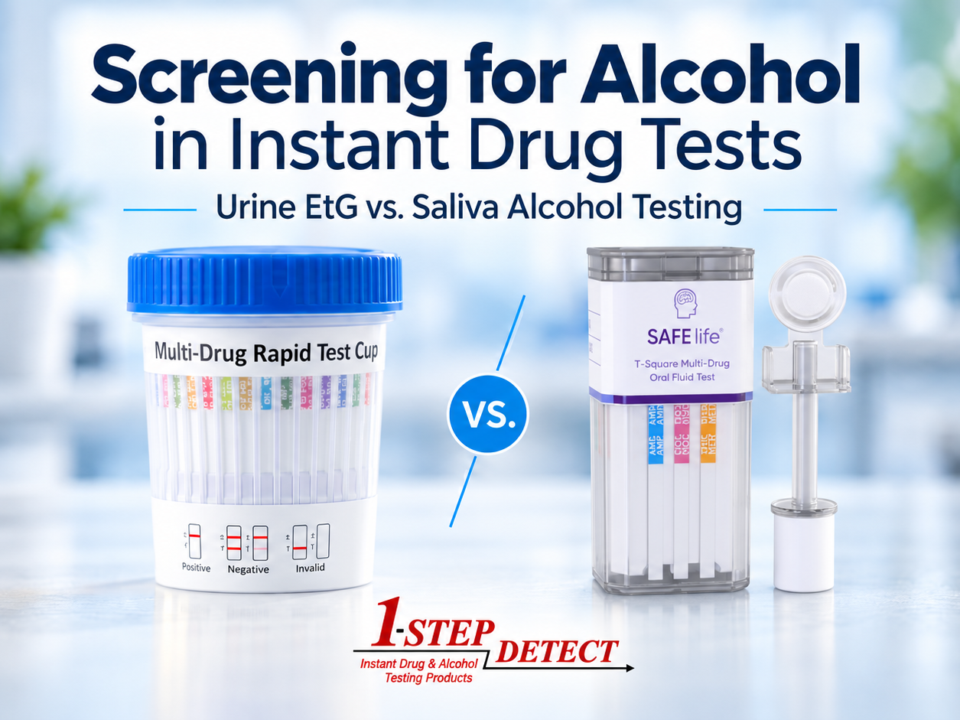
- Alcohol urine testing may target EtG
This matters because cutoff levels apply to the specific analyte the test is designed to detect, not necessarily the original substance someone consumed.
Two assays associated with the same parent drug may therefore use different analytes and different cutoffs.
Does CLIA-Waived Mean a Test Has a Certain Cutoff?
No.
This is another area where buyers sometimes combine two unrelated concepts.
CLIA classification and cutoff level are separate characteristics.
A test can have a particular cutoff and be CLIA-Waived.
Another product may use a similar cutoff and be classified differently.
You should evaluate both independently:
What is the cutoff?
and:
What is the regulatory classification of this exact device?
Do not assume that a familiar cutoff automatically means the test is CLIA-Waived.
What Happens When a Sample Is Right at the Cutoff?
Rapid immunoassays are screening tools, and results near the cutoff are one reason interpretation should remain qualitative.
You should not try to visually estimate whether a sample is:
“48 ng/mL instead of 50.”
The test cannot provide that information.
Assay performance also has normal analytical variability around the cutoff.
That is another reason definitive testing relies on laboratory analytical methods when an exact confirmed result is required.
For the collector using an instant device, the correct approach is simply to interpret the result according to the manufacturer’s instructions:
Negative
or:
Preliminary Positive
—not attempt to assign a concentration to the strip.
What Cutoff Level Should I Choose?
There is no universal answer.
Ask yourself:
Is my testing regulated?
If yes, you may be required to use specific testing procedures, analytes, and cutoffs.
Am I conducting forensic or non-regulated screening?
You may have more flexibility.
Which drug am I concerned about?
Some substances have multiple available cutoff options.
How far back do I want the test to potentially detect use?
Cutoff can be one factor affecting practical sensitivity, although it is not the only factor.
Do I need a CLIA-Waived device?
That may limit which configurations are available to you.
What cutoff have we historically used?
Consistency can matter when maintaining a testing program.
If you are replacing an existing product, do not assume another test with the same drug abbreviations has identical specifications.
Compare the cutoff levels too.
Frequently Asked Questions About Drug-Test Cutoff Levels
What does 50 ng/mL mean on a drug test?
It means the assay uses a concentration of 50 nanograms per milliliter as its specified screening cutoff for that analyte.
It does not mean the person consumed 50 ng of the drug.
Is a lower cutoff better?
Not automatically.
A lower cutoff generally means the test is designed to respond at a lower concentration, but the appropriate cutoff depends on the drug, specimen, intended use, regulations, and testing program.
Can I tell the concentration from a faint test line?
No.
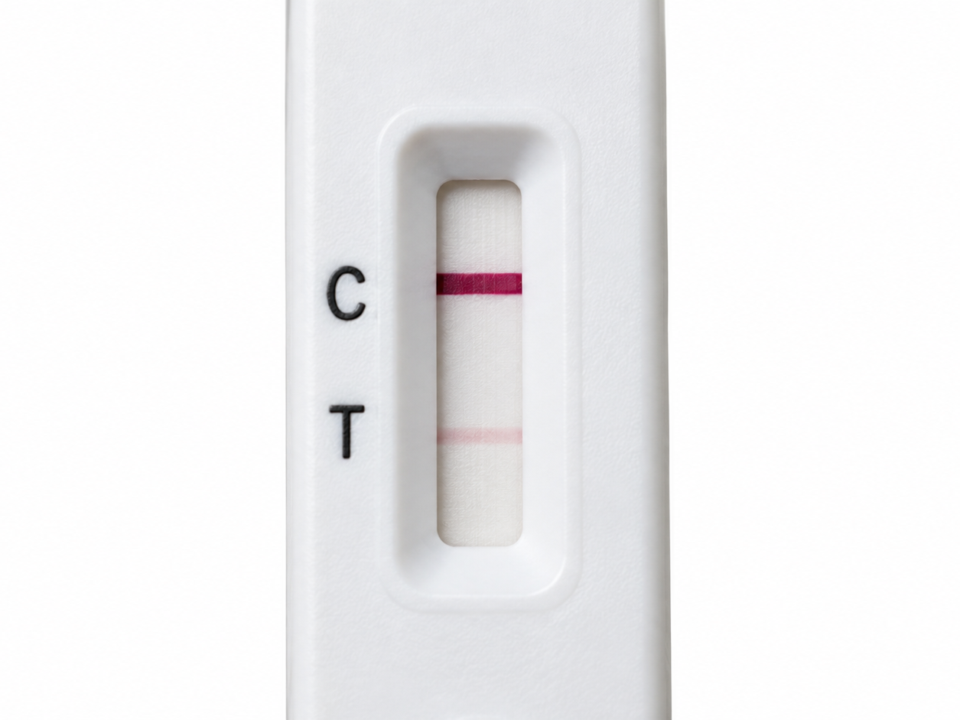
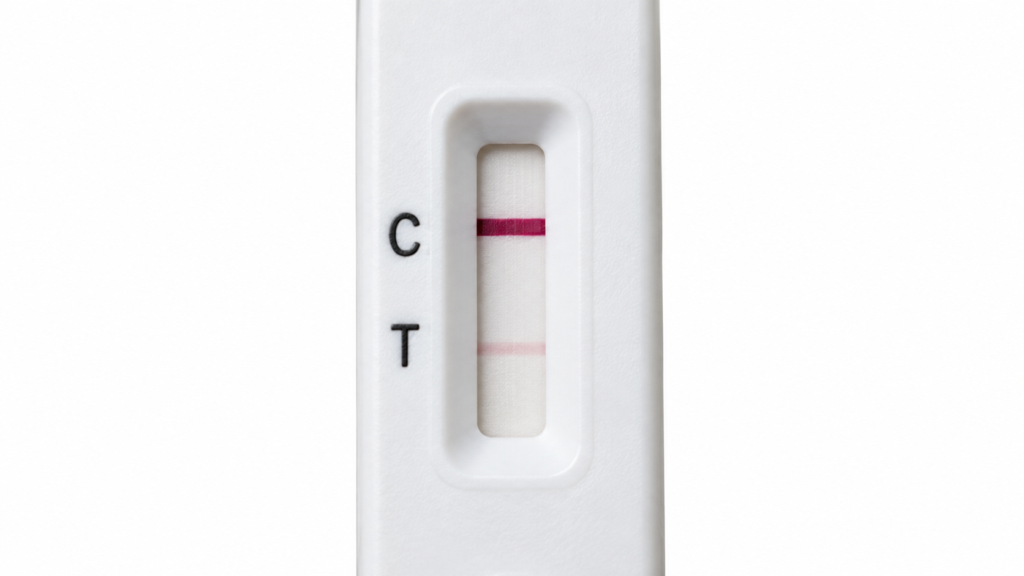
Instant drug screens are qualitative. The intensity of the line is not designed to provide an exact drug concentration.
Why does THC use 50 ng/mL while another drug uses 10 ng/mL?
Different drugs and metabolites occur at different concentrations and require different assay designs. The numbers should not be compared as measures of drug potency.
Can two tests for the same drug have different cutoff levels?
Yes.
Always review the specifications of the exact device you are purchasing.
Is the confirmation cutoff always the same as the initial cutoff?
No.
Laboratory confirmation can use a different cutoff because it employs a more specific analytical method.