
Can You Drug Test for Nicotine?
Yes — you can instant drug test for nicotine use.
But there is one detail that often causes confusion when someone begins shopping for a nicotine drug test:
You usually will not see a panel labeled “NIC.”
Instead, you will normally see:
COT — Cotinine
That is because most instant nicotine tests are not actually looking for nicotine itself. They are looking for cotinine, the primary metabolite produced after the body processes nicotine.
Understanding that distinction is important because cotinine testing can identify recent nicotine exposure from cigarettes, vapes, nicotine pouches, chewing tobacco, and other nicotine-containing products. It can be performed using both urine and saliva, making instant cotinine testing an increasingly useful tool for organizations concerned about nicotine use.
Why Does a Nicotine Drug Test Say “COT” Instead of Nicotine?
Nicotine enters and leaves the body relatively quickly.
After someone uses a nicotine-containing product, the body metabolizes much of that nicotine into other compounds. One of the most important is cotinine.
Cotinine is useful for drug testing because it remains in the body much longer than nicotine itself. Research estimates the elimination half-life of nicotine at roughly 0.5–3 hours, while cotinine has a half-life of approximately 15–20 hours. Because cotinine remains present at higher concentrations for considerably longer, it is generally considered the preferred biomarker for measuring nicotine exposure.
That is why an instant nicotine test usually says:
COT
rather than:
NIC
Think of cotinine as the evidence nicotine leaves behind after the body begins processing it.
Does a Positive Cotinine Test Mean Someone Used Nicotine?
A positive cotinine screen generally indicates that the concentration of cotinine in the specimen exceeded the cutoff of the particular test.
In practical terms, that means nicotine exposure occurred recently enough for cotinine to remain detectable.
However, there is an important distinction.
A cotinine test does not necessarily tell you where the nicotine came from.
Cotinine can result from nicotine exposure associated with cigarettes, disposable vapes, refillable e-cigarettes, cigars, smokeless tobacco, nicotine pouches, nicotine gum, nicotine patches, and other nicotine-containing products. Low concentrations can also occur following substantial secondhand tobacco-smoke exposure.
Therefore, an instant COT screen is best understood as a test for recent nicotine exposure, rather than a test that proves someone smoked a cigarette or used a particular brand of vape.
That difference can be very important when interpreting results.
Can a Nicotine Test Detect Vaping?
Yes.
If the vape contains nicotine and enough nicotine is absorbed, the body will metabolize that nicotine into cotinine.
An instant cotinine test does not care whether the original nicotine came from a cigarette or an e-cigarette. It is detecting the metabolite left after nicotine exposure.
The same principle applies to many newer nicotine products.
Someone could say:
“I don’t smoke.”
That may be completely true.
But if that individual regularly uses nicotine-containing disposable vapes or nicotine pouches, a cotinine test may still produce a preliminary positive result.
That makes COT testing particularly useful today because cigarette smoking is no longer the only major source of nicotine exposure.
Urine Nicotine Testing: How Does It Work?
For many organizations, urine is the most practical specimen for instant cotinine screening.
A urine cotinine dip test works much like other single-panel rapid drug tests.
The testing strip contains an immunoassay designed to respond when cotinine is present at or above the device’s specified cutoff.
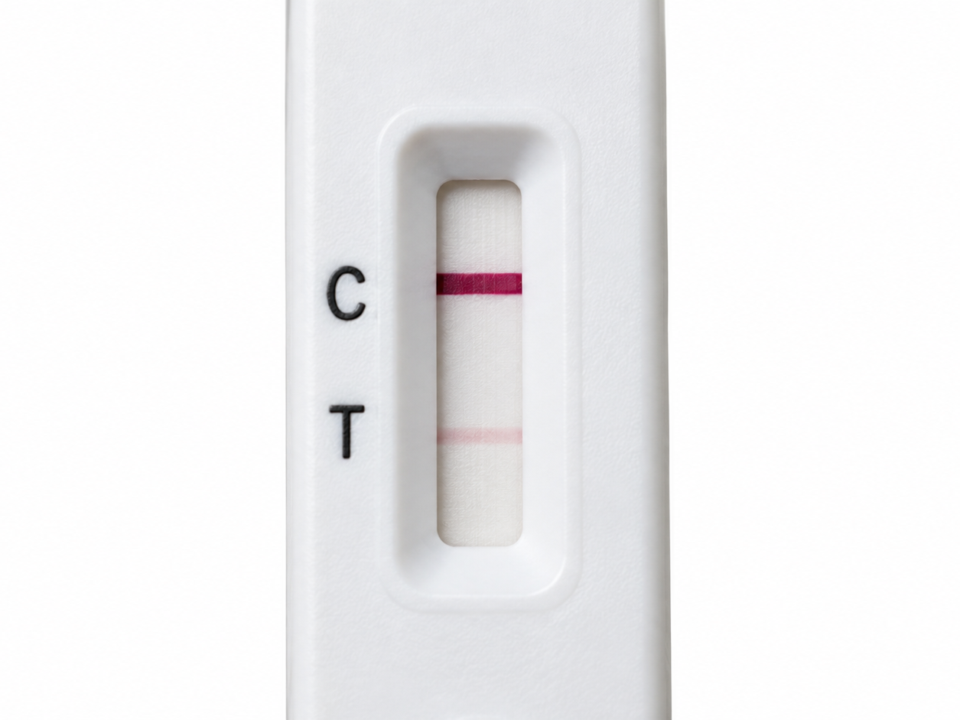
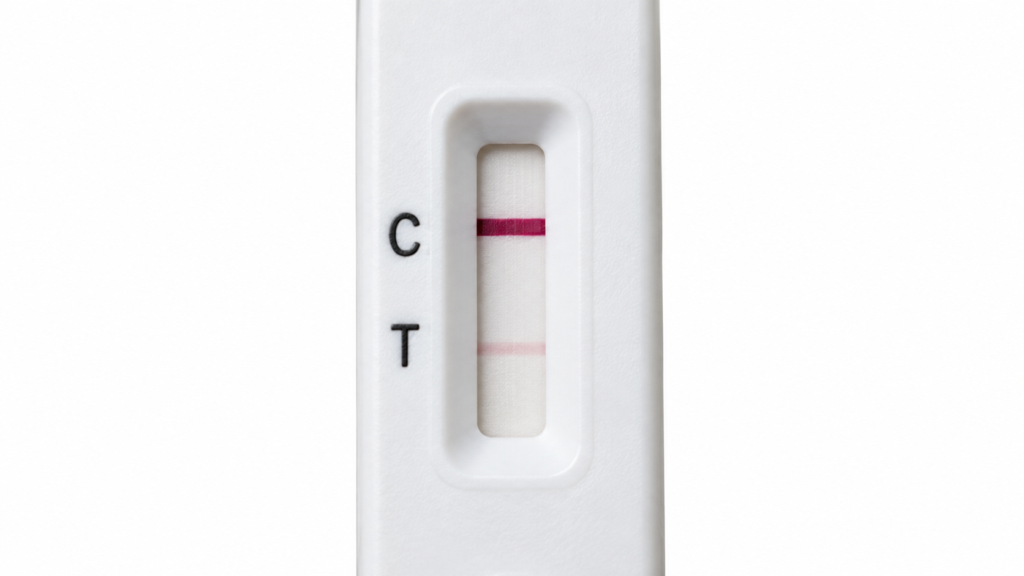
With the competitive immunoassays typically used for rapid drug testing, a negative result generally produces both a control line and a test line, while a preliminary positive typically produces only the control line. As with other rapid drug screens, results should always be interpreted according to the exact manufacturer’s instructions.
Urinary cotinine is a widely used biomarker of recent nicotine exposure. Research evaluating inexpensive cotinine immunoassay strips has found that qualitative rapid urine testing can be useful for classifying nicotine exposure when an appropriate cutoff is used.
How Long Can Nicotine Be Detected in Urine?
Because the test is actually detecting cotinine rather than nicotine itself, the window can extend for several days.
Some sources state that urinary cotinine may be detectable for as long as seven days after nicotine exposure, although the actual detection period varies with the amount and frequency of nicotine use, the test cutoff, metabolism, specimen concentration, and other factors.
A person who uses nicotine frequently may therefore remain positive considerably longer than someone who had limited exposure.
This is one of the biggest advantages of urine cotinine testing.
You are not restricted to trying to catch nicotine itself during its relatively short stay in the body.
Instead, you are looking for the longer-lasting metabolite.
Why Is Urine Often a Good Choice for Nicotine Testing?
Urine testing offers several practical benefits.
First, cotinine concentrations can become relatively high in urine. CDC notes that cotinine concentrations in urine tend to be substantially higher than concentrations in serum, which helps make urine a useful specimen for nicotine-exposure monitoring.
Urine also usually provides a much larger specimen volume than saliva.
For organizations already performing urine drug testing, adding a COT test can be very straightforward. The testing procedure is familiar, collection materials are already available, and results can generally be read within minutes.
The longer practical detection window is another major advantage.
If your primary question is:
“Has this person been using nicotine recently?”
rather than:
“Did this person vape in the last few hours?”
urine is often an attractive option.
1-Step Detect Cotinine (Nicotine) Urine Dip Tests
For customers looking for a straightforward instant nicotine test, 1-Step Detect offers the SAFElife COT (Nicotine) Single-Panel Drug Test Dips, WCOT-114.
These are single-panel urine dip tests designed specifically to screen a urine specimen for cotinine.
The tests are packaged 25 per box and provide preliminary results in approximately five minutes. The device is currently classified as Forensic Use Only, and the specific WCOT-114 product is not CLIA-Waived or FDA 510(k) cleared.
For organizations that perform a large number of nicotine screenings, the simplicity of a single-panel dip makes this one of the most straightforward options in our nicotine-testing selection.
1-Step Detect also offers a Cotinine Cassette/Pipette Drug Test, DCT-102, which provides another urine-based method for cotinine screening. That device is also Forensic Use Only and not CLIA-Waived.
Can You Test for Nicotine With Saliva?
Yes.
Cotinine can also be measured in oral fluid or saliva.
Saliva testing uses the same basic concept: nicotine is metabolized into cotinine, and the device screens the oral-fluid specimen for the presence of that metabolite.
Sources note that cotinine can be measured in serum, urine, and saliva and that its biological half-life is essentially similar across these specimen types.
That is an important point because nicotine testing differs somewhat from comparisons involving drugs such as marijuana.
You should not automatically assume that saliva cotinine disappears within only a few hours simply because the specimen is saliva.
Both urine and saliva nicotine tests are typically screening for cotinine.
The actual detection period depends heavily on the cutoff level of the particular device, amount and frequency of nicotine exposure, and individual metabolism.
Urine vs. Saliva for Nicotine Testing
Urine generally has an advantage when you want a convenient specimen with relatively high cotinine concentrations and the potential for a longer practical screening window.
Saliva has a different advantage:
Collection is extremely easy.
There is no restroom requirement and no need for a person to provide a urine specimen. The collection can be directly observed, making oral-fluid testing particularly convenient in situations where privacy, collection space, or the ability to urinate is a concern.
Saliva can therefore work very well when convenience matters more than maximizing the amount of specimen collected.
For many customers, however, urine remains the primary choice for cotinine testing, while saliva serves as a useful alternative.
1-Step Detect Nicotine Saliva Tests
1-Step Detect also carries a single-panel oral-fluid cotinine test.
The Amazewell COT (Nicotine) Single-Panel D-Pen Mini Saliva Drug Test is designed to detect cotinine from a saliva specimen and provides a convenient alternative to urine collection.
The product is currently classified as Forensic Use Only and is not CLIA-Waived.
For organizations that prefer directly observed collection or want a test that can be administered without a restroom, the saliva option can be particularly useful.
Are Nicotine and Cotinine Tests CLIA-Waived?
There is an important clarification to make here.
It would be inaccurate to say that cotinine itself can never be CLIA-Waived.
CLIA classification applies to the specific test system, not simply to the substance being tested.
The FDA’s current CLIA database does include cotinine test systems that have received waived status, including certain oral-fluid cotinine devices and older nicotine-metabolite test systems.
Why Is Nicotine Testing Becoming More Important?
Nicotine exposure looks very different today than it did decades ago.
For many years, concerns about nicotine were largely associated with cigarettes and other traditional tobacco products.
Today, nicotine can be delivered through disposable e-cigarettes, pod-based vapes, nicotine pouches, synthetic or non-tobacco nicotine products, and many other formats.
That means nicotine use can be much less obvious.
Someone may never smell like cigarette smoke.
There may be no cigarette pack.
There may be no tobacco leaf involved at all.
Yet significant nicotine exposure can still be occurring.
This is particularly relevant when dealing with teenagers and young adults.
Why Is Nicotine So Addictive?
Nicotine is the primary addictive chemical in most tobacco and e-cigarette products.
With repeated exposure, the brain adapts to nicotine. A person may begin experiencing cravings and feel as though nicotine is necessary simply to feel normal.
Tolerance can develop, meaning more frequent or greater exposure may be needed to produce the same effect.
When someone who has become dependent stops using nicotine, withdrawal can include irritability, restlessness, anxiety, depressed mood, difficulty concentrating, sleep problems, increased appetite, and strong nicotine cravings.
Nicotine creates particular concerns for adolescents because the brain continues developing into the mid-20s. Sources state that nicotine exposure during adolescence can affect brain systems involved in attention, learning, mood, and impulse control.
That is one reason rapid cotinine testing can be especially relevant when youth vaping is suspected.
The Problem With Unauthorized Vapes Sold in Convenience Stores and Gas Stations
You will sometimes hear today’s disposable vape market described as “unregulated.”
Technically, that is not quite the right description.
E-cigarettes are regulated by the FDA.
The problem is that large numbers of products being sold in the United States do not have the required FDA authorization.
These unauthorized or illicit products can still be found through vape shops, convenience stores, gas stations, and other retailers.
In September 2025, FDA specifically announced an initiative directed at vape shops, convenience stores, and gas stations selling illegal vaping products. The agency said that as much as 54% of vaping products sold nationally were illegal, and noted concerns about products using candy or fruit flavors and features such as built-in video games and Bluetooth speakers that could appeal to young users.
Federal enforcement has continued.
FDA and Customs and Border Protection have seized millions of unauthorized e-cigarettes, including a 2025 operation involving 4.7 million products valued at approximately $86.5 million. In 2026, FDA issued updated enforcement guidance emphasizing its continued focus on unauthorized e-cigarettes and nicotine products that have not undergone required premarket review.
So rather than saying these products face no regulation, the more accurate concern is:
Many widely available vaping products are being sold without FDA marketing authorization and outside the legal regulatory process.
That creates obvious challenges for parents, schools, treatment providers, and other organizations trying to understand exactly what products individuals are using.
Does Cotinine Testing Tell You What Kind of Vape Was Used?
No.
This is an important limitation.
A rapid cotinine test generally cannot tell you:
whether nicotine came from a disposable vape, cigarette, nicotine pouch, cigar, chewing tobacco, nicotine gum, or another product.
It also cannot tell you the exact amount of nicotine consumed, precisely when it was used, or whether someone was impaired.
It simply provides a qualitative preliminary indication that cotinine is present at or above the test’s cutoff.
For routine instant screening, however, COT testing is primarily intended to answer a simpler question:
Is there evidence of recent nicotine exposure?
Can Nicotine Patches or Gum Cause a Positive Cotinine Test?
Yes.
This is another important consideration.
Nicotine-replacement products contain nicotine.
If someone uses a nicotine patch, gum, lozenge, or another nicotine-replacement product, the body can still metabolize that nicotine into cotinine.
A rapid cotinine test therefore may not distinguish nicotine-replacement therapy from other nicotine products.
Again, COT means cotinine exposure—not necessarily smoking.
This should be considered whenever nicotine testing is used for employment, insurance, treatment, compliance, or other programs where the source of nicotine matters.
So, Can You Drug Test for Nicotine?
Absolutely.
The important thing to remember is that you are usually not testing directly for nicotine.
You are testing for cotinine — COT — the longer-lasting metabolite of nicotine.
That is why someone searching for a “nicotine drug test” may initially be confused when every product they find says COT.
Cotinine is exactly what you should expect to see.
It provides a more useful detection target because it remains in the body much longer than nicotine itself and can be detected in both urine and saliva.
For customers who want an easy and economical instant option, the 1-Step Detect COT single-panel urine dip tests provide a straightforward way to screen for cotinine.
For customers who prefer oral-fluid collection, we also offer a single-panel cotinine saliva test.
As nicotine products continue to evolve—from cigarettes and smokeless tobacco to disposable vapes and nicotine pouches—the way we screen for nicotine exposure needs to evolve as well.