One of the most common questions we hear from customers is:
“How many panels should my drug test be?”
Should you use a 5-panel drug test? A 10-panel? A 12-panel? A 14-panel?
The answer is simple in theory, but a little more complicated in practice:
It really depends on what you need to know.
There is no single panel count that is right for every organization, every testing program, or every situation. A smaller panel may cover everything one customer needs, while another may need a much broader test that includes newer or less commonly screened substances.
The best way to choose a drug test is not to start with the number of panels.
Instead, start with the drugs themselves.
What Does “Panel” Mean on a Drug Test?
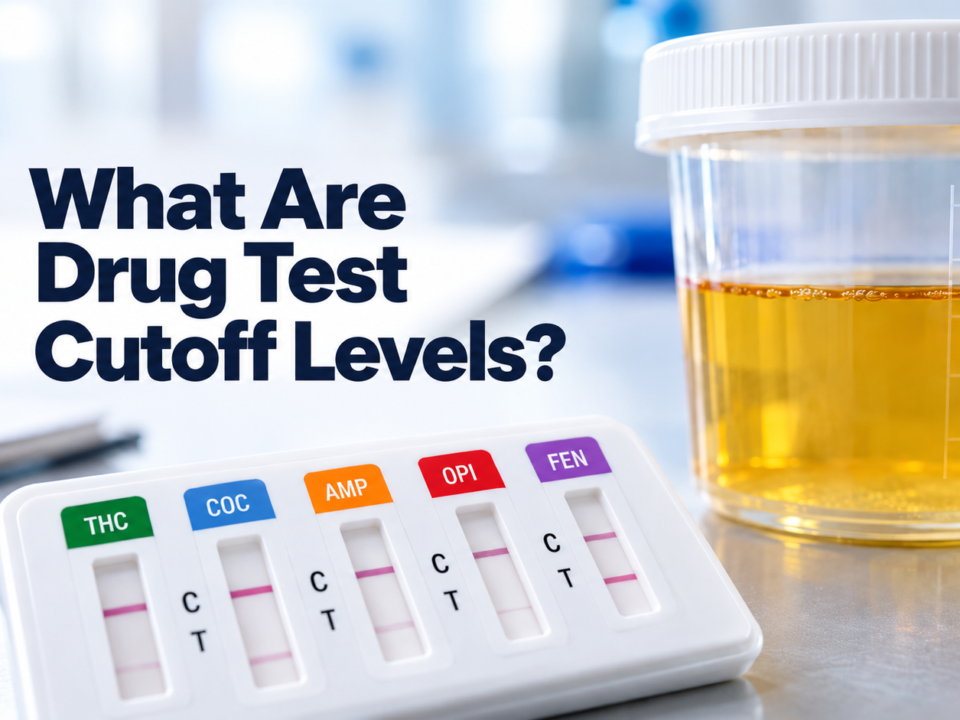
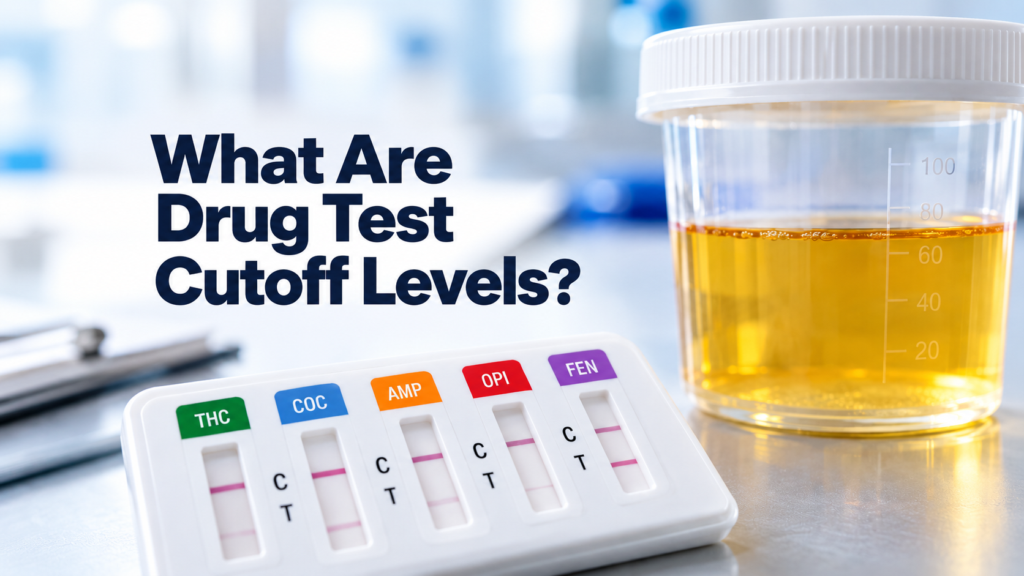
When a drug test is described as a 5-panel, 10-panel, 12-panel, 14-panel, or 20-panel test, the number generally refers to the number of drug classes or analytes included on that particular test.
That sounds straightforward, but there is an important catch:
Not every test with the same number of panels tests for the same drugs.
For example, two different 12-panel urine drug tests may contain different combinations of substances. One may include a drug that is extremely important to your organization, while another 12-panel test may leave it out entirely.
That is why simply saying, “I want a 12-panel test” may not be enough.
A better question is:
“Which 12 drugs does it test for?”
The same concept applies to larger configurations. A 20-panel drug test is not automatically better than a 14-panel test if the additional drugs on the 20-panel are not relevant to your needs.
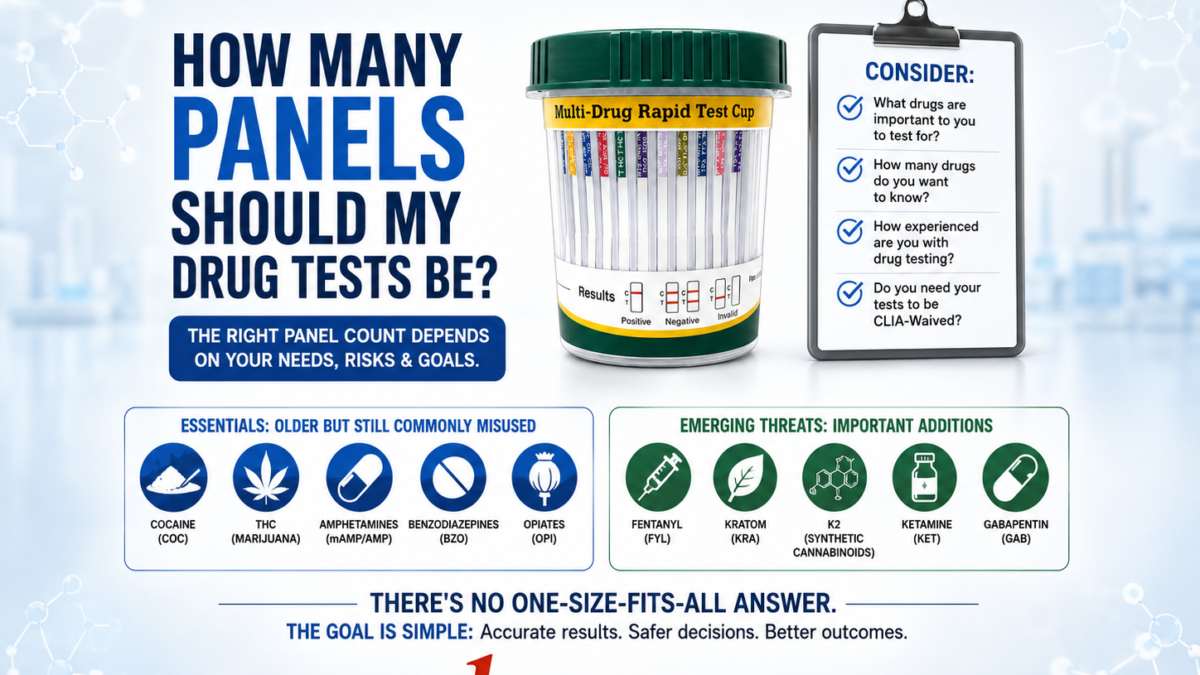
Question #1: What Drugs Are Important for You to Test For?
This should probably be your first consideration.
What drugs are you actually concerned about?
Different organizations may have dramatically different answers.
One program may primarily be concerned with traditional drugs such as cocaine, marijuana, amphetamines, methamphetamine, benzodiazepines, and opiates.
Another organization may be dealing with individuals who are increasingly using fentanyl, kratom, synthetic cannabinoids, ketamine, gabapentin, or other emerging substances.
The number on the package matters far less than whether the test contains the substances that matter to you.
Think of a drug-testing panel as a toolbox.
A toolbox with 20 tools is not necessarily better than one with 12 if the 12-tool box contains exactly what you need.
Question #2: How Much Do You Want to Know?
Another question worth asking is:
How much information do you want to get from each drug test?
Some organizations want a straightforward screening test covering the most common drugs of abuse.
Others take the approach that, if they are already collecting and testing a urine specimen, they want to gather as much useful information from that specimen as reasonably possible.
Neither approach is necessarily wrong.
A smaller panel can be easier to understand and may cost less.
A larger panel can offer a broader picture of potential drug use and may identify substances that would otherwise never appear on a conventional test.
For organizations dealing with changing drug trends, that expanded visibility can be valuable.
Question #3: How Experienced Are You With Drug Testing?
Your level of experience can matter as well.
A basic drug screen with several familiar abbreviations is relatively easy to understand.
Once you move into expanded testing, however, you may begin seeing abbreviations such as:
- FYL or FEN for Fentanyl
- KRA for Kratom
- K2 for Synthetic Cannabinoids
- KET for Ketamine
- GAB for Gabapentin
- TRA or TRAM for Tramadol
- EDDP for a Methadone metabolite
- 6-MAM for a Heroin metabolite
For organizations that conduct drug testing every day, this may not be an issue.
For someone who only occasionally performs testing, a complicated 20-panel or 22-panel device may provide more information than they are prepared to interpret properly.
That does not mean beginners should avoid expanded tests. It simply means that education should increase along with the number of panels.
Understanding what each abbreviation represents, what a preliminary positive means, and when confirmation testing should be considered is an important part of any drug-testing program.
Question #4: Do You Need a CLIA-Waived Drug Test?
This can significantly affect which tests are appropriate for you.
The FDA categorizes clinical laboratory tests according to complexity. Under CLIA, tests may be classified as waived, moderate complexity, or high complexity. CLIA-Waived tests meet specific criteria intended for relatively simple testing with a low risk of erroneous results when performed correctly.
Not every instant drug test is CLIA-Waived.
This becomes particularly important when you begin adding newer or forensic-use analytes.
Some expanded drug tests may contain substances that are not available in the same CLIA-Waived configurations as more traditional drugs.
Before automatically choosing the largest panel available, determine whether CLIA-Waived status is necessary for your particular testing environment.
If it is, make sure the exact device and configuration you purchase carries the appropriate classification.
If it is not required for your application, you may have more flexibility to use expanded forensic-use tests containing newer analytes.
The “Oldies but Not So Goodies”
Drug trends change quickly, but many of the substances that have been included on drug tests for decades are still extremely important.
Newer drugs should not distract from the fact that traditional drugs of abuse remain common.
For many testing programs, these substances still form the foundation of a good panel.
Cocaine — COC
Cocaine remains one of the most recognizable illicit stimulants and continues to be a standard component of many drug-testing configurations.
Cocaine use has certainly not disappeared simply because newer substances have entered the market.
A cocaine panel typically screens for a metabolite associated with cocaine use, making COC one of the longstanding components many organizations still consider essential.
Marijuana / THC — THC
THC is one of the most common substances included on urine drug tests, although whether you should test for it has become increasingly dependent on your specific situation.
Marijuana laws and policies have changed dramatically across the country.
Some organizations continue to include THC on virtually every test. Others may choose to exclude marijuana depending on state law, employment policies, or the nature of their testing program.
For federally regulated workplace testing, marijuana remains part of the authorized drug-testing categories.
For non-federal programs, however, whether THC belongs on your panel may depend on your own policy and applicable law.
Methamphetamine — MET / mAMP
Methamphetamine remains a major drug of abuse.
Despite the increasing attention given to fentanyl and other emerging drugs, methamphetamine continues to be an important substance to screen for in many environments.
It is highly addictive and remains associated with significant public-health and substance-use concerns.
If you are designing a broad drug-testing panel, methamphetamine is still one of the first substances worth considering.
Amphetamine — AMP
Amphetamine is closely related to methamphetamine from a testing standpoint, but it is generally represented as its own analyte.
Amphetamine can be associated with illicit drug use, but it can also be present because of legitimate prescription medications.
That is an important reminder that an instant drug test is a screening tool.
A preliminary positive result does not automatically tell you why the substance is present or whether it was taken legitimately.
Benzodiazepines — BZO
Benzodiazepines are prescription medications commonly associated with anxiety, insomnia, seizures, and other medical conditions.
They are also subject to misuse.
Because of that combination of legitimate medical use and abuse potential, benzodiazepines remain a common addition to many expanded drug-testing panels.
As with amphetamines, a positive screening result should not automatically be interpreted as evidence of improper use.
Opiates — OPI / MOP
Opiates have been a central part of drug testing for decades.
Traditional opiate panels commonly screen for substances or metabolites associated with morphine and codeine.
However, there is one extremely important distinction:
An opiate panel does not automatically detect every opioid.
Synthetic and semi-synthetic opioids may require their own individual tests.
That difference has become increasingly important as the opioid market has evolved.
Newer and Emerging Drugs Are Changing Drug Testing
This is where modern expanded panels become particularly valuable.
Traditional tests were originally built around the drugs that were most important at the time.
But the drug landscape does not stand still.
New substances emerge. Existing drugs become more prevalent. Synthetic compounds appear. Prescription drugs become substances of misuse.
As a result, many organizations are now considering substances that would rarely have appeared on a traditional 5-panel or 10-panel test.
Fentanyl — FYL / FEN
Few substances illustrate the need for modernized testing better than fentanyl.
Fentanyl is a synthetic opioid, and you should not assume that a conventional opiate panel will detect it.
It generally requires a fentanyl-specific assay.
Fentanyl has become important enough that SAMHSA added fentanyl to the federal Authorized Drug Testing Panel with an effective date of July 7, 2025.
That alone demonstrates how significantly drug-testing priorities have changed.
If opioids are a concern for your organization, fentanyl deserves serious consideration when selecting a panel.
Kratom — KRA
Kratom is another substance appearing more frequently on expanded drug-testing devices.
Kratom comes from the plant Mitragyna speciosa and contains psychoactive alkaloids, most notably mitragynine.
Traditional drug screens typically do not include kratom, meaning organizations concerned about kratom use need to specifically choose a test that contains a KRA panel.
Kratom has received even greater attention because of products containing concentrated 7-hydroxymitragynine, or 7-OH.
The FDA has described concentrated 7-OH products as potent opioid products and has taken increasing regulatory action against them. In 2026, DEA also began the temporary-scheduling process for concentrated 7-OH above a proposed threshold and certain synthetic derivatives.
That does not mean every traditional kratom product should be viewed the same as concentrated 7-OH products. The FDA itself specifically distinguishes concentrated 7-OH from natural kratom leaf.
What it does mean is that kratom-related substances are becoming increasingly relevant to modern drug-testing conversations.
Synthetic Marijuana / K2 — K2
Synthetic cannabinoids are another example of why an ordinary panel may not tell the entire story.
Products commonly referred to as K2 or Spice are chemically different from natural marijuana.
Although they may create effects involving the same cannabinoid receptors, a standard THC test should not automatically be expected to detect synthetic cannabinoids.
Organizations concerned about synthetic marijuana need to look specifically for a K2 panel.
This is especially important because someone may incorrectly assume that a negative THC result rules out synthetic cannabinoid use.
It does not.
Ketamine — KET
Ketamine has legitimate medical uses, including anesthesia and certain controlled therapeutic applications.
It also has a history of recreational misuse.
As public awareness and availability of ketamine have increased, more organizations have begun asking whether they should include it in their drug-testing programs.
Ketamine is not usually part of a traditional basic drug screen.
If it matters to your organization, you should specifically look for a test containing a KET panel.
Gabapentin — GAB
Gabapentin is another example of a substance that historically would not have been included in most standard drug tests.
It is a prescription medication with legitimate medical applications.
However, concerns regarding nonmedical use and misuse have led some organizations to begin screening for it.
A standard 5-panel or 10-panel test generally would not provide information about gabapentin.
If this is a substance relevant to your population, selecting a device containing GAB can give you an additional layer of information that a conventional panel would miss.
What Other Drugs Might Belong on an Expanded Panel?
Fentanyl, kratom, K2, ketamine, and gabapentin are only examples.
Depending on your needs, modern expanded tests may also include substances such as:
- Buprenorphine
- Oxycodone
- Methadone
- EDDP
- Tramadol
- MDMA / Ecstasy
- Barbiturates
- PCP
- Tricyclic Antidepressants
- Heroin metabolite 6-MAM
- Alcohol metabolite EtG
- Propoxyphene
- Hydromorphone
- Other emerging or specialty analytes
Again, this is why selecting a test based solely on panel count can be misleading.
A 17-panel test containing the exact emerging drugs that matter to you may be more useful than a 20-panel configuration containing several analytes you have little interest in.
Is a Bigger Drug Test Better?
Sometimes.
But not automatically.
Imagine that you are choosing between two tests.
Test A: 20 panels.
Test B: 14 panels.
At first glance, the 20-panel test seems better.
But what if five or six drugs on Test A are substances you have virtually no reason to test for, while Test B contains every drug your organization is actually concerned about?
In that situation, the 14-panel test could easily be the better choice.
That is why we recommend looking beyond the number on the package.
Ask:
- Does it contain fentanyl?
- Does it contain THC?
- Does it contain kratom?
- Does it contain K2?
- Does it contain benzodiazepines?
- Does it contain oxycodone separately from opiates?
- Does it contain the prescription drugs that matter to my program?
- Is it CLIA-Waived if I need a CLIA-Waived test?
- Do I understand what every panel means?
Those questions will tell you far more than simply comparing “14-panel” against “20-panel.”
Do I Still Need a Basic 5-Panel Drug Test?
For some testing programs, absolutely.
A smaller panel is not necessarily outdated or inadequate.
If your goal is to screen for a defined group of major drug categories, a smaller panel can still be an appropriate and cost-effective solution.
The traditional federal workplace testing structure has historically focused on major categories such as marijuana, cocaine, amphetamines, opioids, and PCP. That panel has evolved over time, most recently with the addition of fentanyl to the authorized federal panel in 2025.
The lesson is not that everyone suddenly needs the largest drug test available.
The lesson is that drug-testing panels should evolve as the drugs you care about evolve.
When Does an Expanded Drug Test Make More Sense?
A larger panel may make more sense when your organization places a high value on broader coverage.
You may want an expanded test if:
- Your testing population has a history of using less-common substances.
- Fentanyl is a concern.
- You want to screen for prescription drug misuse.
- Kratom is becoming relevant to your program.
- Synthetic cannabinoids such as K2 are a concern.
- You need ketamine or gabapentin testing.
- You want more information from each specimen you collect.
- You operate in a setting where drug trends can change quickly.
- You do not require CLIA-Waived tests.
Treatment programs, criminal-justice settings, correctional environments, rehabilitation programs, and other organizations dealing directly with substance use may find expanded panels particularly useful.
But again, every program is different.
Remember: An Instant Drug Test Is a Screening Test
Whether you choose five panels or twenty-two, it is important to understand what an instant drug test actually tells you.
Instant drug tests are generally qualitative screening tests.
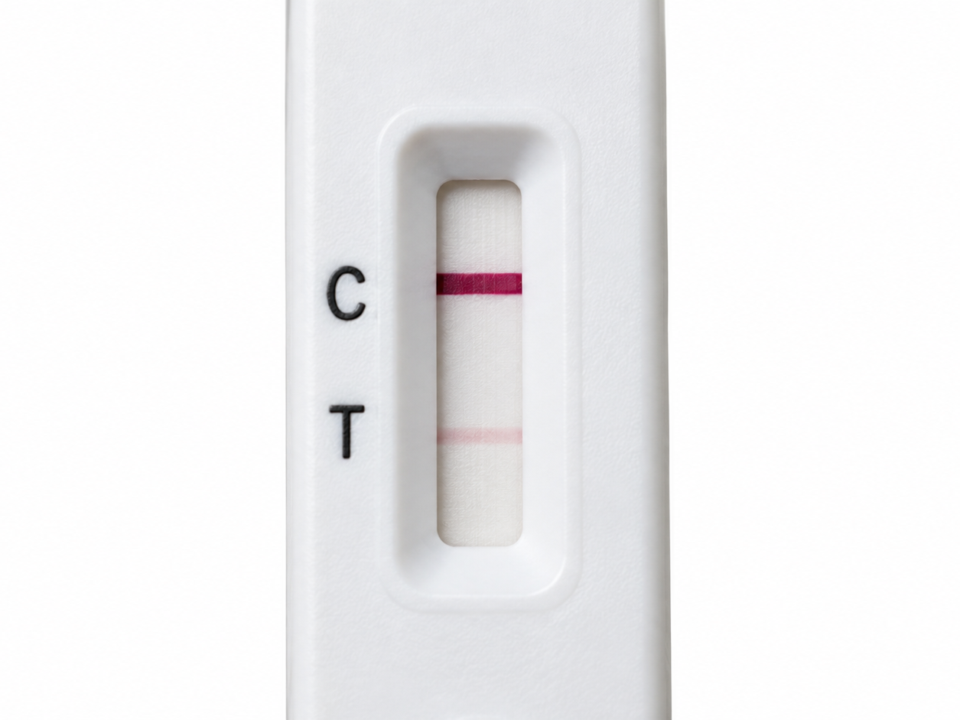
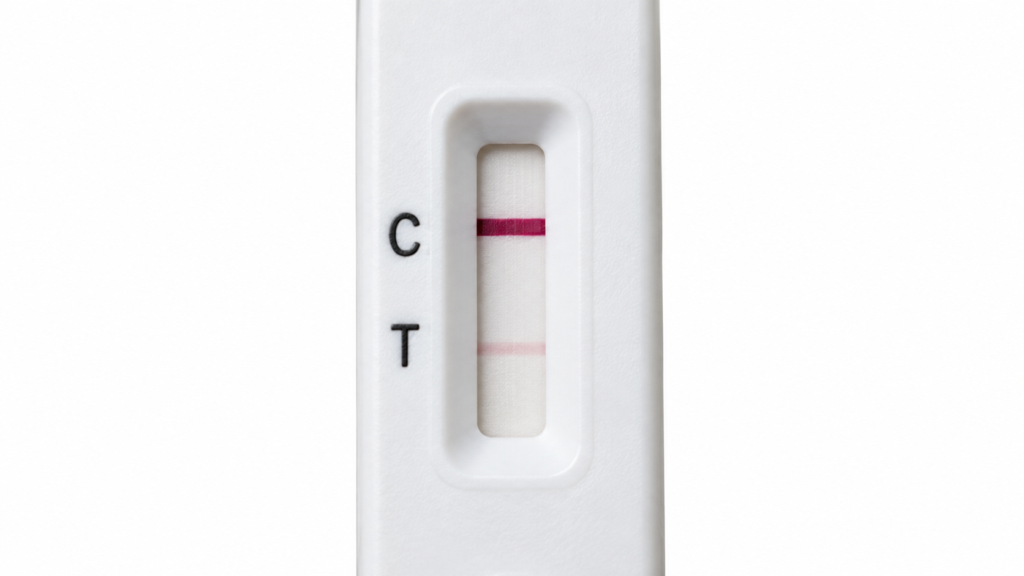
A preliminary positive result indicates that the test detected a substance or metabolite at or above the applicable cutoff.
It does not necessarily tell you:
- Exactly how much of a drug was taken
- When the person took it
- Whether the person was impaired at the time of testing
- Whether the substance came from a legitimate prescription
- Whether another substance caused cross-reactivity
When definitive identification is required, laboratory confirmation may be appropriate.
The more complicated your testing program becomes, the more important proper result interpretation becomes as well.
So, How Many Panels Should My Drug Test Be?
There is no magic number.
A 5-panel drug test may be exactly right for one organization.
Another organization may prefer a 10-panel or 12-panel configuration.
Another may need a 14-panel, 17-panel, 20-panel, or even larger test because it wants to screen for both traditional drugs and newer substances.
Instead of asking only:
“How many panels should I buy?”
Ask yourself these four questions:
1. What drugs are important to me?
Identify the substances you actually care about.
2. How much do I want to know?
Decide whether you need basic screening or broad coverage.
3. How experienced am I with drug testing?
Make sure you understand the additional analytes you are adding.
4. Do I need a CLIA-Waived test?
If you do, verify that the exact device and configuration you are purchasing has the appropriate classification.
Once you answer those questions, choosing your panel becomes much easier.
Choose Your Drug Test Around the Drugs, Not the Number
The biggest takeaway is this:
Do not choose a drug test simply because it has the highest panel count.
Choose it because it contains the drugs you need.
Cocaine, THC, amphetamine, methamphetamine, benzodiazepines, and opiates may be some of the cornerstones of drug testing, but they remain important.
At the same time, fentanyl, kratom, K2, ketamine, gabapentin, and other expanded-panel substances demonstrate how quickly the drug landscape continues to change.
A good drug-testing program recognizes both realities.
You want to continue watching the substances that have remained prevalent for years while also considering the drugs that are emerging, growing, or simply were not included on traditional testing configurations.
At 1-Step Detect, we offer a wide variety of instant urine drug tests ranging from basic panel combinations to expanded configurations containing newer and specialty drugs of abuse.
Whether you need a straightforward traditional panel or are looking to add testing for substances such as Fentanyl, Kratom, K2, Ketamine, Gabapentin, and other emerging drugs, the most important thing is selecting the combination that makes sense for your testing needs.
Because when it comes to answering the question “How many panels should my drug test be?”, the best answer is not always “more.”
The best answer is: enough to test for the drugs that matter to you.
This article is intended for educational purposes and should not be considered legal, medical, or regulatory advice. Drug-testing requirements can vary by jurisdiction, industry, testing purpose, and device classification.