When choosing an instant drug test, one of the most important decisions is not simply how many drugs you want to test for. You also need to decide what type of specimen you want to test.
For most instant drug-testing programs, that decision comes down to two common options:
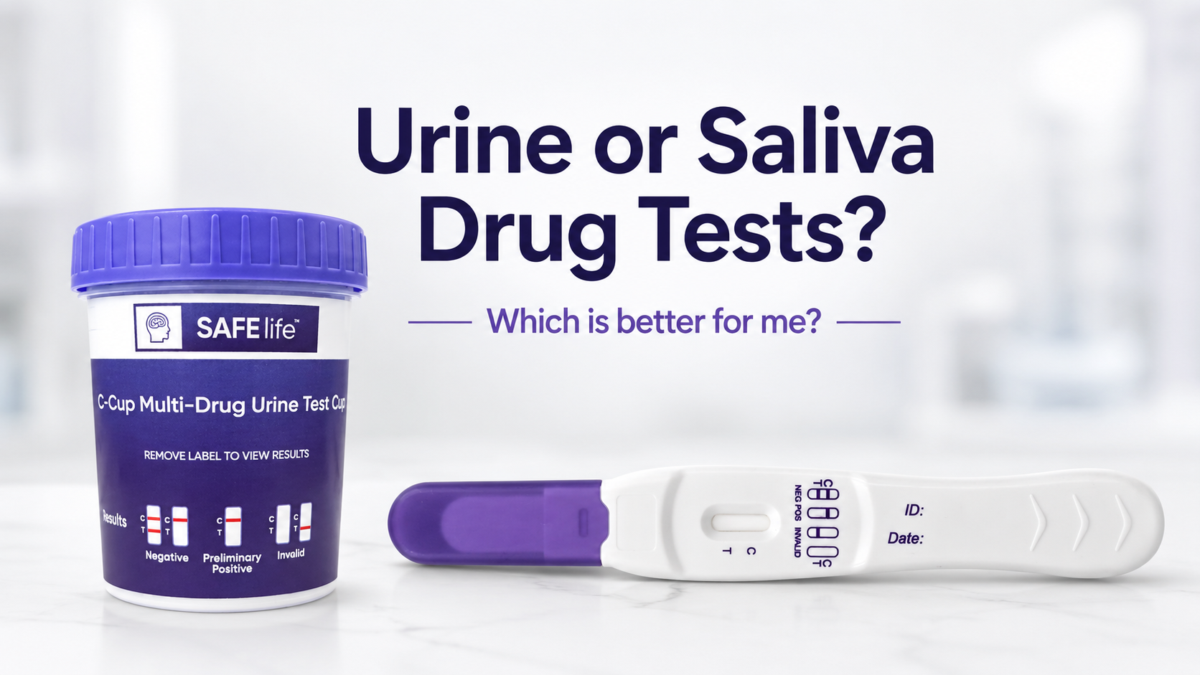
Urine drug tests or saliva — also called oral fluid — drug tests.
So which is better?
The answer is similar to many questions in drug testing:
It depends on what you are trying to accomplish.
Urine testing generally offers a longer detection window for many drugs, a larger specimen volume, and extremely well-established testing procedures. Saliva testing provides convenient, easily observed collection, requires very little privacy, and can be performed almost anywhere.
Neither method is automatically better in every situation.
Understanding the differences can help you determine which one makes the most sense for your drug-testing program.
The Biggest Difference: Detection Windows
One of the most important differences between urine and oral-fluid testing is how far back drug use may be detectable.
Urine generally provides a broader retrospective window for many substances because the test is detecting drugs or their metabolites after the body has processed and eliminated them into urine.
Saliva testing tends to provide a shorter detection for many drugs.
That difference can be extremely important.
If your question is:
“Has this person used this drug sometime during the last several days or potentially longer?”
Urine will frequently provide the more useful specimen.
THC Is a Great Example
Marijuana is one of the clearest examples of how dramatically urine and saliva detection can differ.
With marijuana in particular, frequent or chronic users can remain positive in urine substantially longer than occasional users. In heavy-use situations, urinary THC metabolites may remain detectable for weeks, even months, and unusually prolonged detection has been reported. While for saliva, THC can be out of saliva within hours.
That is why a urine THC test can potentially tell a very different story than a saliva THC test.
Someone could have a negative oral-fluid THC result because the shorter oral-fluid window has passed while still testing positive in urine.
Other Detection-Time Differences
The same principle applies to several other substances including PCP, Barbiturates, Methadone, Benzodiazepines, and more.
The larger takeaway is that urine generally gives you a broader historical picture, than oral fluid.
Always refer to the instructions and detection characteristics of the specific device you are using.
Why Urine Drug Testing Remains So Popular
Urine has been the standard specimen for instant drug testing for many years, and there are several good reasons for that.
1. Longer Detection Windows
For many organizations, this is the biggest advantage.
A person does not necessarily need to have used a drug immediately before the test for urine to detect it.
Depending on the drug and the individual, metabolites may remain detectable for several days or longer.
That makes urine particularly useful when the objective is to identify drug use across a broader period of time.
2. You Usually Collect Much More Specimen
Another practical advantage is simply the amount of sample available.
A urine collection typically produces substantially more fluid than an oral-fluid collection.
That makes it easier for multi-panel testing devices to receive an adequate specimen.
With saliva, you are working with a much smaller quantity.
That difference becomes especially noticeable with multi-panel tests where enough specimen must migrate through several individual test strips.
3. Urine Is Generally Easier for Test Strips to Wick Through
This is an operational detail that does not receive enough attention.
Instant drug tests generally rely on lateral-flow technology.
The specimen needs to travel or “wick” through the testing strip.
Urine tends to be relatively fluid and consistent, which makes this process straightforward.
Saliva can be different.
Oral fluid may be more viscous, and specimen consistency can vary significantly from one person to another.
Someone with a very dry mouth may produce less specimen. Other samples may be thicker or contain bubbles.
Those differences can sometimes make it more difficult for saliva to migrate through a testing strip compared with urine.
4. Urine Offers a Very Broad Range of Drug Panels
Another major advantage is the enormous variety of urine drug-test configurations currently available.
Traditional panels may include drugs such as:
- Cocaine
- Marijuana / THC
- Amphetamine
- Methamphetamine
- Opiates
- Benzodiazepines
- Barbiturates
- PCP
- Methadone
- Oxycodone
- Buprenorphine
Expanded urine tests can also include newer or specialty analytes such as:
- Fentanyl
- Kratom
- K2 / Synthetic Cannabinoids
- Ketamine
- Gabapentin
- Tramadol
- EtG
- EDDP
- 6-MAM
- Other emerging drugs
For organizations looking for extensive multi-drug coverage, urine continues to provide a very large selection of options.
Why Choose a Saliva Drug Test?
Although urine has several important advantages and should always be your primary method of testing, oral-fluid testing solves some very real problems.
For certain programs, saliva may actually be the more practical option.
1. Saliva Testing Is Extremely Convenient
This may be its greatest advantage.
Oral-fluid collection does not require a restroom.
It does not require someone to produce a urine specimen.
And it normally does not require the collector to provide significant privacy.
You can perform a saliva collection in many different environments.
That makes it appealing for:
- Mobile testing
- On-site testing
- Field testing
- Workplace testing
In many cases, all you need is the test and the person being tested.
2. Collection Can Be Directly Observed
With saliva testing, the collection procedure takes place directly in front of the collector.
The collection pad goes into the individual’s mouth, absorbs the oral-fluid specimen, and is then processed according to the test instructions.
This reduces many of the collection-integrity concerns associated with a private urine collection.
The collector can actually see the specimen being collected.
3. Saliva Is Much Less Invasive
An oral-fluid collection is generally a simple process.
There is no need to provide a restroom or have a collector deal with a urine specimen in the same manner as conventional urinalysis.
For both the collector and the individual being tested, this can make the process considerably more comfortable.
4. It Can Be Used As An Alternative When Someone Cannot Urinate
This is one of the most useful applications of saliva testing.
Someone arrives for a test but says:
“I can’t urinate right now.”
If your testing procedures permit an alternative specimen type, oral fluid may allow you to collect a specimen immediately instead of waiting.
That can save a significant amount of time.
Saliva Testing Does Have Its Own Challenges
Convenience does not mean oral-fluid testing is perfect.
There are several things collectors need to understand.
Smaller Specimen Volume
Compared with urine, considerably less fluid is normally collected.
That means proper collection technique becomes especially important.
If you do not collect enough saliva, the specimen may not adequately migrate through all of the test strips.
Make Sure the Collection Pad Is Thoroughly Saturated
One of the most important steps in oral-fluid testing is ensuring that the collection pad has absorbed enough specimen.
Do not rush the collection.
The pad or sponge needs to become thoroughly saturated according to the manufacturer’s instructions before you begin the testing process.
Insufficient specimen is one of the easiest ways to create problems with migration.
Some devices include a saturation indicator to help tell the collector when enough specimen has been obtained.
If your device includes one, use it exactly as directed.
Wick Up Issues
Another issue that can occur with certain oral-fluid devices involves air bubbles.
Some saliva tests use a collection sponge that is inserted or plunged into a collection canister.
When the specimen moves into the test chamber, oral fluid needs to contact the strips so that capillary action can pull it upward.
Occasionally, an air bubble may prevent the liquid from making proper contact with one of the strips.
The result may look something like this:
Most of the panels begin migrating normally, but one test strip remains completely dry.
That does not necessarily mean that particular panel is defective.
There may simply be an air pocket preventing specimen from reaching it.
If this happens and the instructions for your particular device allow it, gently tapping the collection canister on a flat tabletop can help move trapped air bubbles and allow the specimen to contact the strip. If that does not work, trying pressing in on the side of the cannister where the strip is not wicking up. This is just another method used to try and create movement of the trapped air.
Once the liquid reaches the strip, migration may begin normally.
Always follow the instructions supplied with your particular drug test, since collection and troubleshooting procedures can vary between manufacturers and device designs.
Saliva Consistency Can Vary
Another difference between urine and saliva is consistency.
Urine is largely water and is generally fluid enough to migrate readily through lateral-flow strips.
Saliva contains proteins and mucins that can make the specimen more viscous.
Oral-fluid production also differs considerably between individuals.
Factors such as:
- Dry mouth
- Hydration
- Medications
- Recent eating or drinking
- Smoking or vaping
- Individual saliva production
can affect collection.
This is another reason it is important to collect enough oral fluid rather than immediately removing the sponge or collection pad from the mouth.
Urine vs. Saliva: Which One Should You Choose?
Generally, urine provides more accuracy as a primary option of collection in instant testing.
Saliva can be a good back-up option or better in situations where convenience is the most important factor.
Find Urine and Saliva Drug Tests at 1-Step Detect
At 1-Step Detect, we offer instant drug-testing options for both urine and oral-fluid testing, including traditional and expanded-panel configurations.
Whether you are looking for a standard multi-panel urine test, an oral-fluid test for convenient observed collection, or an expanded test covering newer drugs of abuse, the right product ultimately depends on what substances you need to identify and how you plan to collect the specimen.